

Introduction
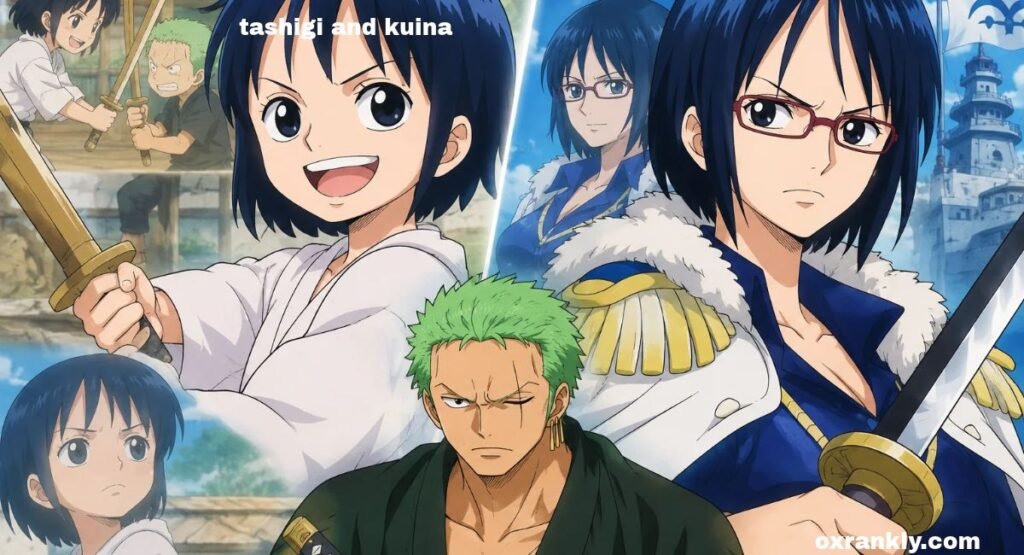
The relationship between tashigi and kuina is one of the most intriguing topics among fans of One Piece. Both characters share a remarkably similar appearance, have strong connections to swordsmanship, and represent important themes surrounding ambition, determination, and the challenges faced by women in the world of professional fighters. Their similarities have led many viewers and readers to wonder whether the two characters are connected by more than coincidence.
Kuina is introduced as a talented young swordswoman whose abilities challenge the expectations placed on her because of her gender. She is also an important part of Roronoa Zoro’s past and plays a major role in shaping his dream of becoming the world’s greatest swordsman. Tashigi, on the other hand, is a Marine officer who is passionate about swords and believes that powerful weapons should not remain in the hands of people who misuse them.
Although the two characters have different backgrounds and personalities, their resemblance is difficult to ignore. Their similar facial features, hairstyles, and interest in swords have encouraged numerous theories within the One Piece community. Some fans have questioned whether Tashigi could be connected to Kuina’s family, while others believe their resemblance serves a symbolic purpose in Zoro’s story.
Understanding tashigi and kuina requires looking beyond their physical appearance. Their individual histories, motivations, relationships, and roles in the wider narrative provide a clearer picture of why they are frequently discussed together. By examining these elements, readers can better understand their significance and the reasons their similarities continue to generate interest.
This article explores their backgrounds, appearances, swordsmanship, relationship with Zoro, major differences, popular fan theories, and the broader meaning of their connection in One Piece.
Who Is Kuina in One Piece
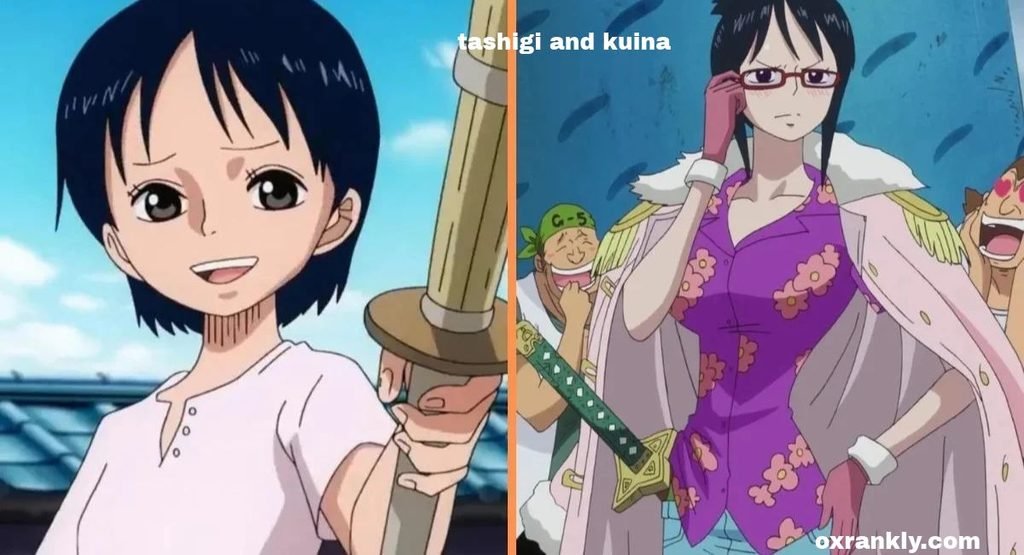
Kuina is a character from the early history of Roronoa Zoro in Eiichiro Oda’s popular manga and anime series, One Piece. She is the daughter of Koushirou, the instructor at the Isshin Dojo, where Zoro trains as a young swordsman. Despite her young age, Kuina possesses exceptional sword-fighting abilities and consistently defeats Zoro during their childhood matches.
Her talent establishes her as one of the most important influences on Zoro’s ambitions. While Zoro is determined to become stronger, Kuina repeatedly demonstrates that she is an extraordinarily skilled opponent. Their rivalry is built on mutual respect, competition, and a shared desire to reach the highest level of swordsmanship.
However, Kuina struggles with a difficult belief about her future. She worries that, as a girl, she will eventually become physically disadvantaged compared with boys and men as they grow older. This concern reflects the gender expectations surrounding swordsmanship in her environment and creates an emotional conflict that goes beyond winning or losing a match.
Zoro refuses to accept the idea that Kuina’s gender should determine her future. Their discussions about becoming the world’s greatest swordsman eventually lead them to make a promise: one of them will achieve that dream. The promise becomes a defining part of Zoro’s character and remains relevant throughout his journey.
Kuina’s death occurs when she falls down a flight of stairs, a tragic event that deeply affects Zoro. Before her death, she gives him Wado Ichimonji, the sword that belonged to her. Zoro carries it as a reminder of their promise and the commitment he made to become the greatest swordsman.
Although Kuina appears primarily in flashbacks, her influence continues throughout the series. Her dream, their rivalry, and the sword she leaves behind all contribute to Zoro’s determination. Her role demonstrates how a character with limited screen time can have a lasting impact on a major protagonist.
Who Is Tashigi in One Piece
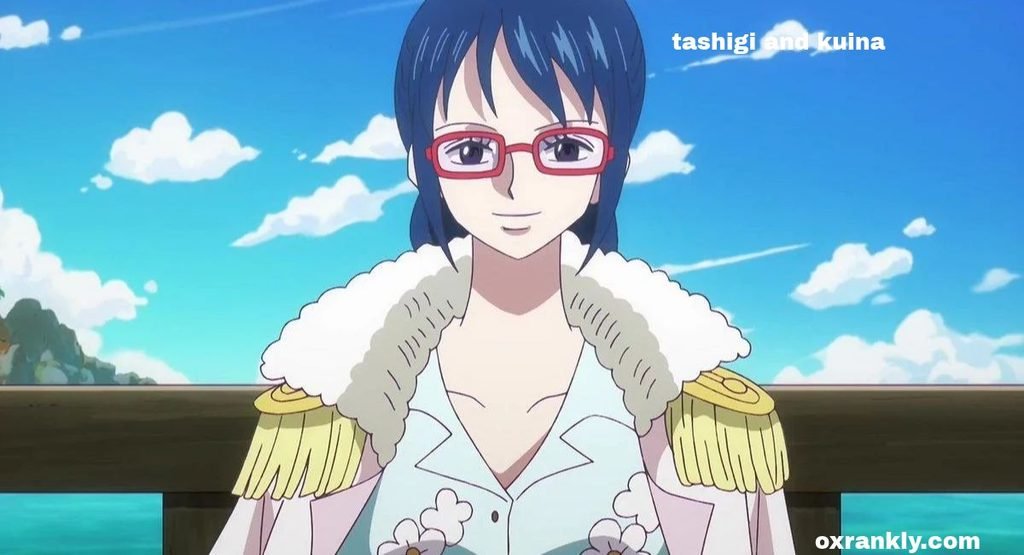
Tashigi is a Marine officer in One Piece who is especially interested in swords and their history. Unlike Kuina, who grows up in a dojo and trains as a young student, Tashigi follows a military career. Her responsibilities involve serving the Marines, enforcing the law, and confronting pirates who threaten public safety.
One of Tashigi’s defining characteristics is her knowledge of famous swords. She recognizes important blades, understands their historical significance, and cares deeply about how they are treated. She believes that valuable swords should not be possessed carelessly by people who lack respect for their craftsmanship and heritage.
Her interest in swordsmanship becomes particularly important when she encounters Roronoa Zoro. Zoro is a pirate who uses several swords and has a reputation as a powerful fighter. From Tashigi’s perspective, his status as a pirate makes him an appropriate target for Marine justice. At the same time, his skill and the swords he carries make him an interesting figure for her.
Tashigi is not simply defined by her duties as a Marine. She also demonstrates compassion and a strong sense of responsibility. Her desire to recover famous swords from dangerous criminals reflects her personal principles, although her encounters with stronger opponents sometimes expose the limits of her abilities.
Her resemblance to Kuina adds another layer to her character. When Zoro first sees Tashigi, her appearance reminds him of his childhood friend. This reaction creates an unusual dynamic between them, as Zoro must confront memories of someone who played a central role in his past.
Tashigi’s story develops independently of Kuina’s. She has her own professional goals, ethical beliefs, and challenges. Her presence in the series raises questions about strength, justice, and the difference between possessing technical knowledge and demonstrating superior combat ability.
Why Do Tashigi and Kuina Look So Similar
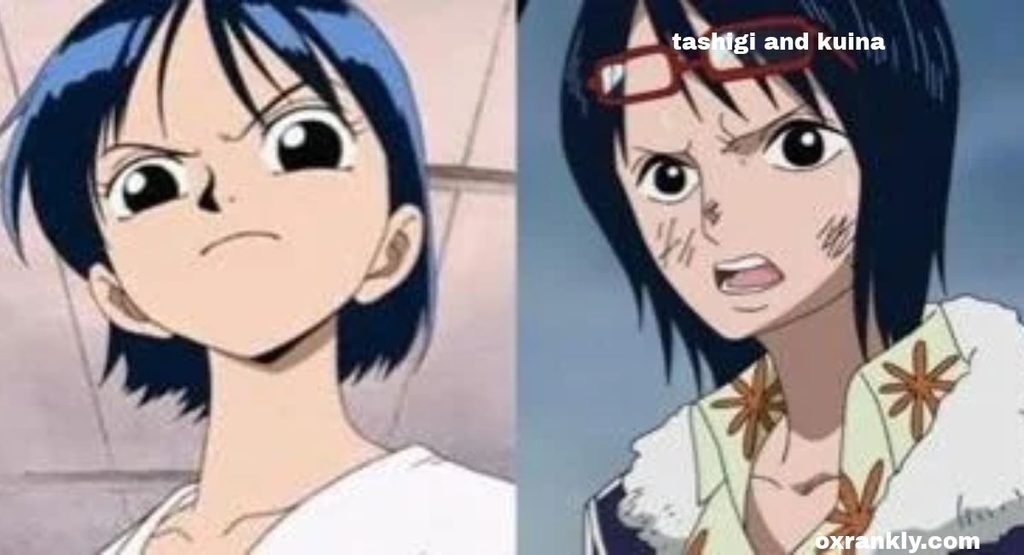
The most noticeable similarity between tashigi and kuina is their appearance. When Zoro encounters Tashigi for the first time in Loguetown, he is shocked by how closely she resembles his deceased childhood friend. The moment is important because Kuina is not simply someone Zoro once knew. She represents a promise that continues to guide his life.
Both characters have similar facial features and dark hair, and both are associated with swordsmanship. Their visual resemblance is so striking that Zoro struggles to treat Tashigi as an entirely separate person. This reaction becomes an important part of their early interactions.
However, their resemblance does not establish that they are relatives or that they share the same identity. In fact, the story introduces Tashigi as a separate character with her own history, responsibilities, and goals.
The resemblance also creates an interesting contrast. Kuina is someone Zoro remembers from his childhood, while Tashigi is someone he meets during his journey toward becoming the world’s greatest swordsman. One represents a promise rooted in the past, while the other challenges him in the present.
Their similarities encourage viewers to consider how memories influence the way people respond to others. Zoro’s reaction shows that even a powerful fighter can be emotionally affected by reminders of someone important to him.
Are Tashigi and Kuina the Same Person
One of the most frequently discussed questions about tashigi and kuina is whether they are actually the same person. Because their appearances are so similar, some fans have suggested that Kuina might have survived her reported death and later joined the Marines under a different identity.
This theory became popular because Kuina’s death is described during a flashback rather than shown in extensive detail. Fans who question the circumstances have wondered whether there could be more to the story than Zoro initially understands.
Nevertheless, Tashigi and Kuina are not established as the same person in the official story. Kuina is presented as Zoro’s deceased childhood friend, while Tashigi has her own identity as a Marine officer. The creator, Eiichiro Oda, has also reportedly described the resemblance as a coincidence rather than a hidden identity reveal. The Direct+2
Their separate experiences reinforce this distinction. Tashigi does not behave as though she remembers growing up with Zoro, and her interactions with him reflect her own understanding of justice and swordsmanship.
The distinction matters because a character’s visual design can serve a storytelling purpose without implying a secret family connection. Writers and artists sometimes use similar appearances to create emotional parallels, remind audiences of earlier events, or place a protagonist in situations that test their beliefs.
In this case, Tashigi’s resemblance to Kuina allows the story to revisit Zoro’s childhood promise without bringing Kuina back to life. The result is a connection that remains meaningful even though the characters have different identities.
The Popular Theory That Tashigi Is Related to Kuina
Although the idea that Tashigi is secretly Kuina is not established as canon, another theory suggests that the two characters could be related. Supporters of this interpretation point to their similar appearances and shared interest in swords.
A possible family connection might seem like an explanation for their resemblance. In many fictional stories, characters who look alike eventually turn out to be siblings, cousins, or members of the same family. This familiar storytelling pattern encourages audiences to search for clues.
However, resemblance alone is not enough to establish a family relationship. The official character information identifies Kuina as the daughter of Koushirou, while Tashigi has a separate background as a Marine. No confirmed family relationship between the two has been established in the cited character information.
It is therefore more accurate to treat the family-connection idea as fan speculation rather than a confirmed revelation.
The theory remains interesting because it demonstrates how carefully viewers examine One Piece. Even a relatively small detail, such as two characters having similar facial features, can lead to extensive discussion about the story’s hidden meanings.
Until the story establishes otherwise, readers should distinguish between what the series confirms and what fans imagine might happen.
Tashigi and Kuina’s Connection to Roronoa Zoro
Zoro is the central link between tashigi and kuina. Although the two women do not share an established personal history, their roles in his life create a strong narrative connection.
Kuina is one of the first people to challenge Zoro’s understanding of strength. As a child, he wants to become an exceptional swordsman, but his repeated defeats against Kuina demonstrate that determination alone does not guarantee victory. Their rivalry encourages him to keep improving.
Their promise becomes one of the foundations of his ambition. After Kuina’s death, Zoro takes responsibility for pursuing the dream they shared. Wado Ichimonji becomes a physical reminder of that commitment.
When Zoro meets Tashigi, he encounters someone whose face reminds him of the person who inspired that dream. His response is complicated because Tashigi is also a Marine, and Zoro is a pirate. Their opposing positions create tension even before their swordsmanship is compared.
Zoro’s feelings about Kuina affect how he responds to Tashigi during their early encounters. He sometimes appears unwilling to fight her seriously, which frustrates her. Tashigi interprets his behavior as disrespectful, particularly when she believes he is underestimating her because she is a woman.
This misunderstanding is significant because it reveals that Zoro’s personal memories can influence his decisions. He respects swordsmanship, but his connection to Kuina makes it difficult for him to view Tashigi without remembering his childhood.
Their relationship is therefore not a simple continuation of Zoro and Kuina’s rivalry. Instead, it is a new relationship shaped by the emotional consequences of the old one.
Wado Ichimonji The Sword That Connects Their Stories
Wado Ichimonji is one of the most important objects associated with tashigi and kuina because it represents the promise between Kuina and Zoro.
The sword belonged to Kuina’s family and was associated with her own training as a swordswoman. Following her death, Zoro receives the blade and carries it with him as he pursues his ambition.
Wado Ichimonji is not merely an instrument of combat. It represents memory, loyalty, and responsibility. Every time Zoro uses the sword, its significance extends beyond the immediate battle.
Tashigi’s interest in famous swords creates an additional connection to this part of Zoro’s history. She studies renowned blades and believes that swords with important histories should be protected from people who do not deserve to wield them.
Her knowledge of famous swords is one of the reasons she becomes interested in Zoro’s collection. She recognizes that his blades are significant and questions whether a pirate should possess such weapons.
This difference in perspective creates an interesting conflict. Zoro sees his swords as essential companions in his personal journey, while Tashigi views famous blades through the lens of their history, quality, and rightful ownership.
Their disagreement is not simply about who can fight better. It also concerns what a sword represents and what responsibilities come with possessing one.
Through Wado Ichimonji, Kuina’s memory remains connected to Zoro’s present life. Tashigi’s interest in the blade brings that history into their encounters, even though she does not share Kuina’s established personal connection to it.
Comparing Tashigi and Kuina’s Swordsmanship
Both characters are associated with swordsmanship, but their abilities are presented in different ways.
Kuina is portrayed as an exceptionally talented young swordswoman. During her childhood rivalry with Zoro, she repeatedly defeats him, demonstrating that she possesses considerable natural ability and disciplined training.
Her achievements are particularly impressive because she is still young. She understands the fundamentals of swordsmanship and is capable of using her skills to overcome an opponent who is equally determined to improve.
Tashigi, meanwhile, is an experienced Marine who actively uses a sword in the line of duty. She has practical combat experience and knowledge of renowned blades, making her more than a collector or historian.
However, Tashigi’s journey also includes moments of frustration. She sometimes encounters opponents whose abilities exceed her own, forcing her to confront the difference between understanding swordsmanship and being able to defeat every opponent.
The two characters therefore represent different stages and dimensions of a swordswoman’s development.
Kuina demonstrates the importance of talent, training, and ambition. Tashigi demonstrates the importance of experience, knowledge, and the willingness to continue improving.
It would be misleading to claim that one is definitively stronger than the other based on their limited direct comparison. They do not engage in a confirmed duel that establishes a clear ranking between them.
Instead, their individual stories emphasize different aspects of swordsmanship. Kuina’s importance comes largely from her exceptional ability and influence on Zoro, while Tashigi’s role develops through her career as a Marine and her continuing efforts to become a stronger fighter.
How Gender Influences Their Stories
Gender is an important theme in the stories of both tashigi and kuina. Their experiences explore the expectations placed on women who want to succeed in a traditionally male-dominated fighting environment.
Kuina’s struggle is especially direct. Although she is an exceptionally capable swordswoman, she worries that she will eventually be unable to compete with boys as they grow into men. Her concern reflects the limitations she believes society places on her future.
This insecurity creates a painful contradiction. Kuina is skilled enough to defeat Zoro repeatedly, yet she doubts whether her ability will remain sufficient as they grow older.
Zoro challenges that belief. He refuses to accept that Kuina’s gender should determine whether she can achieve greatness. Their promise gives both characters a shared goal, although Kuina’s death prevents her from pursuing it alongside him.
Tashigi faces a related challenge in a different environment. As a Marine and swordswoman, she wants to be respected for her ability rather than judged according to assumptions about women.
Her encounters with Zoro reveal this sensitivity. When he refuses to fight her with full seriousness, she becomes angry because she does not want her opponent to treat her as incapable.
The difference is that Kuina’s story focuses on her fear of future limitations, whereas Tashigi’s story focuses more on proving herself through her present responsibilities.
Together, their experiences raise questions about how people define strength. Physical ability matters in swordsmanship, but determination, confidence, discipline, and opportunity also influence how a person develops.
Their stories do not offer a simple answer to every challenge women face in the world of One Piece. Instead, they show how personal ambition can become entangled with social expectations.
Tashigi’s Personality and Kuina’s Personality
Despite their physical resemblance, tashigi and kuina are not presented as identical personalities.
Kuina is competitive, talented, and deeply committed to swordsmanship. Her rivalry with Zoro reveals a serious side, but their interactions also demonstrate the emotional closeness that develops between two young people who share an ambitious dream.
She is willing to acknowledge her doubts, even when those doubts concern her own future. Her honesty gives her character emotional depth and makes her influence on Zoro more meaningful.
Tashigi is similarly serious about swords, but her personality is shaped by her role in the Marines. She believes strongly in justice and takes her responsibilities seriously.
Her passion for famous blades sometimes makes her appear stubborn, particularly when she encounters pirates who possess weapons she considers too valuable to be used irresponsibly.
She also has moments of awkwardness and uncertainty. These qualities prevent her from being portrayed as an effortlessly confident fighter. Instead, she is a character who has to confront her weaknesses while continuing to pursue her ideals.
The two characters share determination, but they express it differently. Kuina’s ambition is developed through her rivalry with Zoro, while Tashigi’s determination is connected to her professional mission and beliefs about the proper treatment of swords.
Their differences are important because they show why appearance alone does not define a character. Tashigi can remind Zoro of Kuina without being required to repeat Kuina’s personality or life story.
The Importance of Tashigi’s First Meeting With Zoro
Tashigi’s first meeting with Zoro in Loguetown is a turning point in how the series connects its present events with his past.
Before this encounter, Kuina’s memory is primarily associated with Zoro’s childhood and his commitment to becoming a great swordsman. Tashigi’s appearance brings that memory into his current journey in a surprising way.
Zoro’s reaction immediately communicates that something about this encounter is emotionally different from his usual confrontations. He is accustomed to evaluating opponents through their fighting abilities, but Tashigi’s resemblance to Kuina introduces a personal complication.
Their conversation also establishes their opposing values. Tashigi is a Marine who distrusts pirates, whereas Zoro is a pirate who pursues his own ambitions. Their disagreement about swords and justice makes their interactions more complicated than a straightforward rivalry.
The encounter gives Tashigi an independent role in the story while also reminding viewers of Kuina’s importance. It connects a new character to an existing emotional theme without requiring the return of a deceased character.
This is one reason the meeting remains memorable. It shows how the story can use a visual similarity to create tension, develop relationships, and revisit an important part of a protagonist’s history.
How Their Roles Develop Throughout One Piece
Kuina’s influence is most strongly felt through Zoro’s memories, his promise, and his continued use of Wado Ichimonji. Although she does not accompany him on his adventures, her legacy remains part of his motivation.
Her role illustrates how a character can remain important even after leaving the active narrative. Zoro’s ambition is not presented as an entirely individual pursuit; it is also a commitment to someone whose dream ended before it could be fulfilled.
Tashigi’s role develops through her continuing work as a Marine. Her encounters with pirates, her relationship with Smoker, and her interest in sword history give her an ongoing place in the wider story.
She also has opportunities to confront her own limitations and reconsider what it means to be strong. These experiences allow her character to develop independently rather than existing solely as a reminder of Kuina.
The contrast between their narrative roles is essential. Kuina provides an emotional foundation for Zoro’s dream, while Tashigi introduces new conflicts that test his attitude toward swordsmanship and opponents.
Their connection therefore contributes to the series in two different ways. One character helps explain why Zoro pursues his ambition, and the other challenges how he behaves as he works toward it.
What Tashigi and Kuina Symbolize in One Piece
The connection between tashigi and kuina can also be understood through the themes they represent.
Kuina symbolizes unrealized potential and the importance of keeping promises. Her exceptional skill suggests that she could have achieved great things, yet her life ends before her ambition can be fully explored. Zoro’s commitment to their promise allows her dream to remain present within the story.
Tashigi symbolizes the continuing struggle to develop one’s abilities and live according to personal principles. She is not satisfied with simply admiring famous swords; she wants to protect their significance and prevent them from being misused.
Both characters demonstrate that ambition is not always straightforward. Kuina struggles with her beliefs about gender and the future, while Tashigi encounters the practical difficulties of confronting stronger opponents and pursuing justice.
Their resemblance strengthens these themes by placing Tashigi in situations where Zoro cannot entirely separate the present from the past.
However, the symbolism does not require the two characters to be the same person or relatives. Their parallel roles are meaningful even without a hidden biological connection.
The broader lesson is that people can remind us of others who shaped our lives without sharing their histories. Memories can influence our decisions, but those memories should not prevent us from recognizing another person’s individual identity.
Frequently Asked Questions About Tashigi and Kuina
Are Tashigi and Kuina the same person
No confirmed story information establishes that Tashigi and Kuina are the same person. Kuina is Zoro’s deceased childhood friend, while Tashigi is a Marine officer with her own identity and background.
Why does Tashigi look like Kuina
The series deliberately presents Tashigi as resembling Kuina, and Zoro notices the similarity when they meet. The resemblance creates an emotional connection to Zoro’s past, but it does not establish that the two characters are related.
Are Tashigi and Kuina sisters
There is no confirmed information establishing that they are sisters. The idea is a fan theory based largely on their similar appearances and interest in swords.
Did Kuina really die in One Piece
Yes. Kuina is presented as having died during Zoro’s childhood. Her death becomes a major part of his backstory and motivates his commitment to their shared dream.
Why does Zoro act differently around Tashigi
Tashigi reminds Zoro of Kuina, someone whose death had a profound impact on him. This resemblance affects his attitude toward Tashigi and complicates their early encounters.
Does Tashigi use Kuina’s sword
Tashigi’s own sword is Shigure, while Wado Ichimonji is the blade Zoro receives from Kuina’s family after her death. The two swords have different owners and roles in the story.
Who is the better swordswoman, Tashigi or Kuina
The story does not provide a definitive direct contest establishing which character is stronger. Kuina is portrayed as an exceptionally talented child who repeatedly defeats Zoro, while Tashigi is an experienced Marine swordswoman who continues developing her abilities.
Does Tashigi know about Kuina
Tashigi does not have an established personal relationship with Kuina in the story. Their connection is primarily created through their resemblance and their separate interactions with Zoro.
Conclusion
The story of tashigi and kuina demonstrates how two characters can be closely connected through appearance, themes, and their influence on another person’s life without necessarily sharing the same identity.
Kuina is the childhood rival who helps shape Zoro’s dream of becoming the world’s greatest swordsman. Her talent, struggles, death, and final gift of Wado Ichimonji remain important parts of his motivation.
Tashigi is a Marine officer who has her own ambitions, principles, and relationship with swordsmanship. Her resemblance to Kuina creates tension in her encounters with Zoro, but her character develops through experiences that are distinct from Kuina’s.
Although fan theories about a secret identity or family relationship continue to attract attention, neither possibility should be presented as established fact. The confirmed story provides a meaningful connection without requiring a hidden explanation for their resemblance.
Ultimately, tashigi and kuina represent two different perspectives on ambition, strength, and the responsibilities associated with swordsmanship. Their parallel stories enrich Zoro’s character and show how memories of the past can influence present relationships. That combination of mystery, emotional significance, and contrasting personalities explains why fans continue to discuss these two One Piece characters together.




Pingback: Jake Paul vs Anthony Joshua Height Who Is Taller and How Big Is the Difference - oxrankly.com