
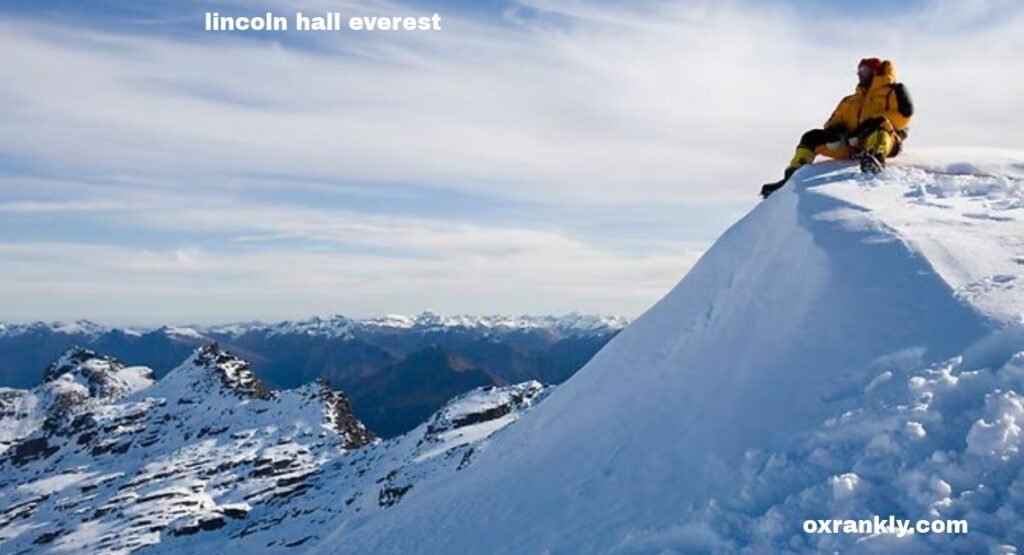

Introduction The Extraordinary Story of Lincoln Hall Everest
The story of lincoln hall everest remains one of the most remarkable survival stories in modern mountaineering. In May 2006, Australian climber Lincoln Hall reached the summit of Mount Everest, the highest mountain in the world. However, his achievement soon turned into a life-threatening emergency when he became severely ill during his descent. His condition deteriorated so dramatically that his expedition team believed he had died and left him on the mountain.
What happened next astonished climbers and people around the world. The following morning, another group of mountaineers discovered Hall alive at an altitude of approximately 8,600 to 8,700 metres, where freezing temperatures, limited oxygen, and extreme weather make survival extraordinarily difficult. The rescuers abandoned their own summit ambitions to help him, beginning a dangerous operation that eventually brought him back to safety.
The incident became a powerful example of human endurance, the unpredictable dangers of high-altitude climbing, and the importance of compassion in life-threatening situations. Hall’s experience also raised difficult questions about the responsibilities climbers have toward one another on Everest.
Understanding the Lincoln Hall Everest story requires looking beyond the dramatic moment when he was found alive. His earlier climbing experience, the physical challenges he faced, the decisions made during his rescue, and the life he led afterward all contribute to the significance of this extraordinary event.
Who Was Lincoln Hall
Lincoln Hall was an Australian mountaineer, author, and adventurer who devoted much of his life to exploring some of the world’s most challenging mountain environments. Born in Canberra, Australia, in 1955, he developed an interest in climbing during his teenage years. His early experiences introduced him to the combination of physical strength, concentration, patience, and sound judgment required for mountaineering.
Hall’s interest in the outdoors developed into a serious climbing career. He explored mountains in Australia and overseas, gradually gaining experience in environments where unpredictable weather and difficult terrain could turn a routine expedition into a dangerous undertaking. He also became involved in writing and sharing stories about mountain exploration, allowing him to communicate the excitement and risks of climbing to a wider audience.
His background was important to the events that unfolded on Everest. Hall was not an inexperienced tourist who had suddenly decided to attempt the world’s highest mountain. He was a seasoned climber who understood the demands of serious expeditions. Yet his experience could not eliminate the risks associated with extreme altitude, exhaustion, and severe mountain weather.
Hall was also a family man. His wife, Barbara Scanlan, and their two sons were central to his life outside mountaineering. The emotional importance of returning home became particularly significant after his near-fatal experience. His survival was not simply a remarkable achievement in climbing; it was also a deeply personal event that allowed him to return to the people he loved.
Why Mount Everest Is So Dangerous


Mount Everest stands approximately 8,849 metres above sea level, making it the highest mountain on Earth. Located in the Himalayas on the border between Nepal and the Tibet Autonomous Region of China, it attracts experienced mountaineers from many countries. For climbers, reaching the summit represents the completion of a demanding physical and mental challenge.
However, the mountain’s height creates dangers that cannot be fully understood through photographs or ordinary hiking experiences. As altitude increases, atmospheric pressure decreases, meaning each breath provides less available oxygen to the body. The human body must work harder to maintain normal functions, and even experienced climbers can suffer serious altitude-related illnesses.
Temperatures can fall dramatically, while powerful winds and sudden storms make movement difficult. Snow-covered slopes, exposed ridges, crevasses, and steep rock sections add further risks. Climbers must also manage their oxygen supplies, food, water, protective clothing, and remaining physical energy throughout the expedition.
One of Everest’s most dangerous areas is commonly called the death zone, referring to elevations above approximately 8,000 metres. At these heights, the body cannot adapt sufficiently to the low oxygen environment for prolonged survival. Fatigue, impaired judgment, and illness can develop or worsen rapidly.
The Lincoln Hall Everest incident occurred in this exceptionally hostile environment. His experience demonstrated that reaching the summit is only one part of a successful expedition. Climbers must also descend safely, and the journey back can become even more dangerous when exhaustion and altitude sickness begin to affect the body.
Lincoln Hall’s Journey to the Summit in 2006
Lincoln Hall’s dramatic experience took place during the spring climbing season of 2006. He joined an organised expedition attempting Everest from its northern side, approaching the summit through Tibet. The expedition involved experienced guides and Sherpa climbers who supported the ascent and descent.
Reaching Everest’s summit requires careful planning. Climbers typically spend weeks at different elevations to help their bodies adjust to reduced oxygen levels. They must also choose suitable weather windows, coordinate their movements with other expedition members, and decide when conditions are too dangerous to continue.
Hall had attempted Everest before, in 1984, but had turned back near the summit because of the extreme cold. His return to the mountain in 2006 therefore represented another significant chapter in his climbing career. This time, he succeeded in reaching the top.
On 25 May 2006, Hall reached the summit of Everest. For any mountaineer, this is a remarkable achievement, representing years of preparation and the successful completion of an exceptionally demanding ascent. Yet the celebration was short-lived.
As Hall began descending, he developed serious symptoms associated with high-altitude illness. His physical condition deteriorated, and his ability to think clearly became increasingly impaired. The descent that should have taken him toward safety became a struggle for survival.
His story illustrates a critical principle of mountaineering: reaching the summit does not mean the expedition is over. Every climber must preserve enough energy, oxygen, and mental awareness to return safely. On Everest, the descent can be just as dangerous as the ascent, and sometimes even more so.
What Happened to Lincoln Hall on Everest
The most frightening part of the Lincoln Hall Everest story began when he became critically ill while descending from the summit. Reports described symptoms consistent with severe altitude sickness, including cerebral edema, a dangerous condition involving swelling of the brain.
At extreme altitude, reduced oxygen availability can affect both the body and the brain. When cerebral edema develops, symptoms may include confusion, difficulty walking, unusual behaviour, reduced consciousness, and potentially death. Affected climbers may be unable to recognise the seriousness of their condition or cooperate with people attempting to help them.
Hall became confused and began hallucinating. According to accounts of the incident, the Sherpa guides accompanying him spent hours attempting to support and revive him. They faced a desperate situation because Hall needed urgent assistance, but their own oxygen supplies and physical strength were running low.
As daylight faded, the guides were also exposed to the dangers of remaining at extreme altitude. They could not safely stay indefinitely without risking their own lives. Eventually, the expedition leader instructed them to descend after Hall appeared to have died.
Hall was left on the mountain, and his expedition team reported that he had died. News of his presumed death reached his family, who faced the devastating prospect of losing a husband and father during a climbing expedition.
The circumstances were tragic and complicated. The guides had attempted to help him, but the combination of extreme altitude, deteriorating weather, exhaustion, and limited oxygen created a situation in which rescuers also faced potentially fatal consequences.
What nobody knew at that moment was that Hall was still alive. Despite his critical condition and the freezing environment, he survived through the night.
The Night Lincoln Hall Spent Alone on Everest

Spending a night alone near the summit of Everest is extraordinarily dangerous. At approximately 8,600 to 8,700 metres, the environment offers little protection from freezing temperatures, powerful winds, and oxygen deprivation. Even a well-equipped climber can struggle to remain functional in such conditions.
Hall had reportedly lost or removed important pieces of his clothing and no longer had the equipment and supplies needed for a safe descent. Accounts of the rescue describe him without his hat and gloves, with his clothing improperly arranged and without the supplemental oxygen equipment that could have helped sustain him.
His confusion was a major part of the danger. Severe altitude sickness can impair a person’s ability to make sensible decisions. Hall’s behaviour suggested that he was not fully aware of his surroundings, making it difficult for him to protect himself from the cold or understand what had happened.
The human body loses heat rapidly when exposed to extreme cold, particularly when a person is exhausted, inadequately dressed, or unable to move. Frostbite can damage exposed fingers, toes, and other body parts, while hypothermia can interfere with vital bodily functions.
Hall’s survival through that night remains extraordinary because several life-threatening factors were acting together. He was at an altitude where oxygen was scarce, his mental state had deteriorated, and the protective equipment available to him was inadequate.
His survival should not be interpreted as evidence that people can safely endure similar conditions without assistance. Everest is unforgiving, and the outcome of an incident depends on many unpredictable factors. Hall’s experience was exceptional rather than a situation that climbers could reasonably expect to survive.
The Morning Rescue Climbers Discover Hall Alive
On the morning of 26 May 2006, a team led by American-born mountaineering guide Dan Mazur was climbing toward Everest’s summit when its members encountered Hall. The group included Canadian climber Andrew Brash, British climber Myles Osborne, and Sherpa climber Jangbu Sherpa.
The team was approximately two hours from the summit when it came across Hall near a rocky feature known as Mushroom Rock on the mountain’s northern route. What they found was shocking: a climber sitting exposed at extreme altitude, apparently without the equipment necessary to survive.
Hall was alive but severely impaired. His clothing was disordered, his hands were frostbitten, and he was confused about his surroundings. Rather than behaving like someone making an ordinary request for help, he appeared disconnected from the reality of his situation.
His first words to the rescuers became famous because they revealed the extraordinary contrast between his condition and the fact that he was still alive. He reportedly told them that he imagined they were surprised to see him there.
The rescuers immediately understood that Hall needed urgent assistance. They helped him arrange his clothing, supplied warm protective gear, gave him oxygen, and provided food and water where possible. They also secured him to reduce the risk of a fall on the exposed mountain terrain.
Hall’s condition meant that even simple actions required patience. He was not fully able to understand what was happening, and the rescuers had to keep helping him with basic protective measures.
The discovery transformed an ordinary summit attempt into a rescue operation. The climbers had invested considerable time, money, and physical effort in reaching the top, but they now faced a more immediate decision: continue toward the summit or help a fellow mountaineer who might otherwise die.
Why Dan Mazur’s Team Abandoned the Summit

Dan Mazur and his team decided to help Hall rather than continue their summit attempt. This decision became one of the defining aspects of the Lincoln Hall Everest story.
Climbing Everest requires substantial preparation and financial investment. Climbers often spend months training and planning, while expedition members work toward a goal that may depend on a narrow period of favourable weather. Turning back near the summit can therefore be deeply disappointing.
However, the team recognised that Hall’s survival was more important than completing its own climb. The rescuers shared their oxygen, food, water, and protective equipment while communicating with Hall’s expedition team to arrange further assistance.
The rescue was not straightforward. The rescuers needed to keep Hall protected while dealing with altitude, limited supplies, and the possibility of worsening weather. They also had to consider how to move him safely down the mountain, where steep terrain and exhaustion could endanger everyone involved.
The group remained with Hall for several hours while arrangements were made for additional support. Their own oxygen supplies were being used, and the delay meant that a summit attempt was no longer realistic.
Mazur’s decision is often remembered as an example of putting human life ahead of personal achievement. The summit would remain there for another attempt, but Hall’s chance of survival was limited by time and conditions.
This decision also highlights the importance of leadership in mountaineering. A leader must evaluate not only the ambitions of an expedition but also the safety and welfare of the people encountered along the way.
The team did not know for certain how the rescue would end. It nevertheless chose to act, accepting the loss of its summit opportunity to give Hall a chance to live.
The Role of Sherpa Climbers in Lincoln Hall’s Rescue
Sherpa climbers played an essential role in the effort to save Hall. Their high-altitude experience, knowledge of mountain routes, and ability to operate in challenging Himalayan conditions make them vital members of many Everest expeditions.
After Hall was discovered, the rescuers contacted his expedition team and worked to organise additional assistance. Getting a seriously ill climber down from extreme altitude is much more complicated than helping a healthy person descend. The individual may be unable to walk independently, follow instructions, or protect themselves from falling.
Hall’s condition required continuing care, oxygen, and a coordinated descent. Additional Sherpa support helped make it possible to transfer responsibility for his care and move the rescue forward.
The operation took considerable time and effort. Accounts of the incident describe a rescue involving numerous Sherpas and substantial quantities of supplemental oxygen. Hall eventually reached lower elevations and made his way back toward base camp with assistance.
This part of the story deserves particular recognition. The dramatic discovery by Mazur’s group attracted international attention, but the larger rescue depended on the continued work of many people. The Sherpa climbers who helped transport Hall and provide support were fundamental to the outcome.
Their contribution also reminds readers that Everest expeditions rely on extensive teamwork. Behind every successful climb or rescue are people whose skills, physical labour, and judgment can make the difference between life and death.
How Lincoln Hall Survived the Everest Death Zone
The question of how Hall survived the night has fascinated mountaineers and readers for years. There is no single explanation that fully accounts for his survival. Instead, the outcome appears to reflect a combination of physical endurance, individual circumstances, and the timely arrival of rescuers.
Several factors help explain the extraordinary nature of his experience.
First, Hall had extensive climbing experience. Decades of mountaineering had exposed him to difficult conditions and taught him how to function in demanding environments. Experience cannot eliminate the effects of altitude sickness, but it can influence a person’s responses to danger.
Second, he survived long enough to be discovered. Despite the freezing environment and his lack of adequate protection, Hall remained alive through the night. The precise reasons for his survival cannot be established with certainty.
Third, the rescue team arrived when he still had a chance of recovery. The climbers gave him oxygen, food, water, and protective clothing, then worked to secure further help. Their actions were essential because Hall was too impaired to manage his own descent.
Finally, he received continued assistance after the initial rescue. Finding Hall alive was only the beginning. Moving him down the mountain and providing medical treatment were necessary parts of the process.
His story should not be reduced to the idea that determination alone can overcome every physical limit. Severe altitude sickness is a medical emergency, and the human body can deteriorate rapidly in the death zone. Hall’s survival was extraordinary precisely because the circumstances were so dangerous.
Lincoln Hall’s Injuries and Recovery After Everest

After being brought down from the high mountain, Hall began the process of receiving medical care and recovering from his ordeal. His survival was remarkable, but he did not escape the consequences of spending the night exposed to extreme conditions.
He suffered frostbite affecting his fingers and toes, along with complications associated with altitude illness. Reports also described a chest infection and fluid-related complications. His injuries required medical attention and a period of recovery.
Hall eventually reached Everest base camp, where he could receive further assistance. Because of his weakness and injuries, he was transported part of the way on the back of a yak, an animal traditionally used to carry people and supplies in Himalayan regions. He subsequently travelled to Kathmandu for medical care.
Frostbite can cause lasting damage because extreme cold reduces blood flow to affected tissues. In Hall’s case, he lost a toe and the tips of several fingers. These injuries were a permanent reminder of the night he spent near Everest’s summit.
Recovery involved more than physical healing. Hall had experienced an event that brought him close to death and had to return to ordinary life after an experience few people could imagine.
Nevertheless, he survived and was able to reunite with his family. His return was especially meaningful because his loved ones had already been told that he had died. The difference between the news they received and the reality of his survival made the event even more extraordinary.
How the Lincoln Hall Everest Story Changed His Life
Hall’s survival became an internationally reported story, attracting attention from newspapers, broadcasters, climbers, and people interested in extraordinary human experiences.
For many readers, his experience was a story of hope. A climber presumed dead had survived an entire night in one of the harshest environments on Earth and was found alive the following morning.
However, the story also involved difficult questions about risk, responsibility, and the limits of rescue at extreme altitude. Everest presents situations in which helping another person can expose rescuers to serious danger. There are no easy answers when a rescue requires people to risk their own lives.
Hall discussed his experience publicly and contributed to conversations about mountain safety. He also wrote about his ordeal in his book Dead Lucky: Life After Death on Mount Everest, published in 2007. The book offered readers a closer look at his experience and the events surrounding his survival.
The incident became part of a broader discussion about what climbers owe one another. Hall’s rescue showed that people can make a meaningful difference by responding quickly and compassionately, even when doing so requires abandoning an important personal goal.
His story also highlighted the need for expedition leaders to prepare for emergencies, establish realistic turnaround decisions, and understand the limits of what can be achieved when a climber becomes seriously ill.
The Ethical Questions Raised by Everest Rescues
The Lincoln Hall Everest incident generated discussion about the responsibilities of climbers on crowded routes and the difficult choices faced by people at extreme altitude.
Some observers focused on the fact that Hall had been left behind after his guides believed he was dead. Others emphasised that the guides had spent hours attempting to help him and were themselves facing dangerous conditions. Remaining with an incapacitated climber at extreme altitude can threaten the lives of everyone involved, particularly when oxygen supplies are running out.
These circumstances make it important to distinguish between a deliberate refusal to help and a situation in which rescuers genuinely believe they cannot safely continue.
The discovery of Hall also occurred during a climbing season marked by other fatal incidents, including the death of British climber David Sharp earlier that month. The contrast between these events intensified public discussion about whether climbers should stop to help people in distress.
There is no simple rule that resolves every high-altitude emergency. The feasibility of a rescue depends on the person’s condition, weather, available oxygen, terrain, and the physical capabilities of potential rescuers. A rescue that is possible in one situation may be impossible in another.
Nevertheless, Hall’s survival demonstrates the importance of assessing an emergency carefully rather than assuming that a person is beyond help without sufficient reason. It also highlights the value of communication between expedition teams and the need for clear emergency procedures.
The most enduring lesson is not that every climber must attempt every rescue regardless of the consequences. It is that human life deserves serious consideration, and that difficult decisions should be made with as much information, coordination, and compassion as circumstances allow.
What Can Mountaineers Learn From Lincoln Hall Everest
Hall’s experience offers several lessons for people interested in mountaineering, adventure travel, and outdoor safety.
Reaching the summit is not the only goal
A successful expedition is one in which climbers return safely. Summit fever, the desire to achieve a long-awaited goal at almost any cost, can interfere with sound judgment. Hall’s experience illustrates why descending safely must remain the priority.
Altitude sickness must be taken seriously
Confusion, loss of coordination, unusual behaviour, and declining consciousness can signal a serious medical emergency at high altitude. Such symptoms should never be dismissed as ordinary tiredness.
Preparation has limits
Experience, equipment, training, and planning all improve safety, but they cannot remove every risk. Weather changes, illness, exhaustion, and unexpected circumstances can affect even skilled climbers.
Teamwork saves lives
Hall’s rescue depended on cooperation among climbers, guides, Sherpas, and expedition support staff. Communication and coordination were essential to getting him down the mountain.
Compassion can require sacrifice
Mazur’s group abandoned its summit attempt to help Hall. Their decision illustrates that personal achievement sometimes must take second place to a more urgent human need.
These lessons apply beyond Everest. Hikers, climbers, and adventurers of every experience level benefit from recognising their limits, preparing carefully, and understanding when conditions require them to turn back.
Lincoln Hall’s Life Beyond the Mountain
Hall’s identity extended far beyond his survival story. He was an experienced mountaineer, a writer, and someone who contributed to efforts supporting communities in the Himalayas.
Together with his wife, Barbara, he helped establish the Australian Himalayan Foundation, which supported educational and community initiatives in Himalayan regions. The foundation reflected an interest in the people who live in the mountains, rather than focusing exclusively on the achievements of visiting climbers.
This broader contribution matters because the Himalayas are not simply a destination for adventure. They are home to communities with their own histories, cultures, traditions, and economic challenges. The work of organisations supporting education and community development can create lasting benefits beyond individual expeditions.
Hall’s life also demonstrated that mountaineering can be a source of writing, reflection, and public discussion. Through his books and interviews, he helped others understand the mixture of beauty, uncertainty, danger, and personal meaning associated with high-altitude exploration.
On 20 March 2012, Hall died in Sydney at the age of 56 from mesothelioma, a cancer associated with asbestos exposure. His death came several years after the Everest incident that had made him internationally known.
Although his life ended, the story of his survival continued to inspire discussions about resilience, responsible climbing, and the importance of helping others.
Why the Lincoln Hall Everest Story Still Matters
The Lincoln Hall Everest story remains significant because it combines extraordinary survival with difficult questions about human judgment and responsibility.
For mountaineers, it serves as a reminder that the world’s highest mountain can overwhelm even highly experienced climbers. Reaching the summit is a major achievement, but survival depends on the ability to descend safely, respond to emergencies, and make difficult decisions under pressure.
For the wider public, the story demonstrates how an unexpected act of assistance can change the course of another person’s life. Dan Mazur and his companions could have continued toward the summit, but instead they devoted their time and resources to helping a stranger who was close to death.
The story also encourages a balanced understanding of rescue situations. The initial guides faced a dangerous and complicated emergency, while the second team arrived under different circumstances and was able to organise further assistance. Both the dangers faced by rescuers and the value of continuing efforts to save lives deserve recognition.
Perhaps the most powerful aspect of Hall’s experience is the contrast between what appeared to be the end of his life and the beginning of an unexpected recovery. His survival cannot be treated as a formula for overcoming danger, but it can serve as a reminder of the uncertainty that defines extreme environments.
The mountain remained the same before and after his ordeal: beautiful, challenging, and indifferent to human ambition. What changed was the understanding of those who heard his story.
Frequently Asked Questions About Lincoln Hall Everest
Who was Lincoln Hall?
Lincoln Hall was an Australian mountaineer, author, and adventurer known internationally for surviving a night near Everest’s summit in May 2006 after he was presumed dead.
Did Lincoln Hall reach the summit of Everest?
Yes. Hall reached the summit on 25 May 2006. He subsequently became critically ill during his descent and was found alive the following morning by another climbing team.
Why was Lincoln Hall left on Everest?
Hall suffered severe altitude-related illness and became confused and unresponsive. After spending hours attempting to assist him, his accompanying Sherpa guides believed he had died. Facing dangerous conditions and diminishing oxygen supplies, they descended without him.
Who rescued Lincoln Hall?
A team led by Dan Mazur discovered Hall on 26 May 2006. The team included Andrew Brash, Myles Osborne, and Jangbu Sherpa. They provided immediate assistance and helped coordinate a larger rescue effort.
How did Lincoln Hall survive the night?
The precise reasons for his survival are not fully established. He endured the night despite extreme altitude, cold, and inadequate protection, then received oxygen, food, water, and clothing when the rescuers found him.
What injuries did Lincoln Hall suffer?
He experienced severe frostbite, losing a toe and the tips of several fingers. He also suffered from altitude-related illness and other complications that required medical treatment.
Did the rescuers reach the summit?
No. Mazur’s group abandoned its summit attempt to help Hall. The rescue took priority over completing the climb.
What happened to Lincoln Hall after Everest?
Hall recovered sufficiently to return to his family and continued writing and contributing to mountaineering and Himalayan community initiatives. He died in 2012 from mesothelioma.
Conclusion The Lasting Legacy of Lincoln Hall Everest
The story of lincoln hall everest is much more than an account of a climber who survived against extraordinary odds. It is a story about the dangers of extreme altitude, the limits of human endurance, and the decisions that can determine whether someone receives a second chance at life.
Hall’s summit achievement was remarkable, but his survival became the defining event of his mountaineering career. After severe altitude sickness left him helpless near the summit, he survived the night and was discovered by climbers who chose to put his life ahead of their own ambitions.
Their actions, supported by the efforts of Sherpa climbers and other expedition personnel, helped turn a presumed death into an extraordinary rescue. The incident continues to encourage discussions about mountain safety, emergency planning, leadership, and compassion.
Ultimately, Lincoln Hall’s legacy reminds us that achievement is not measured solely by reaching the highest point. Sometimes, the most meaningful decision is to turn back, help another person, and recognise that a human life is worth more than a summit.




Pingback: Warrior Cats Name Ideas 250+ Creative Unique Cute and Powerful Names for Your Cat - oxrankly.com