
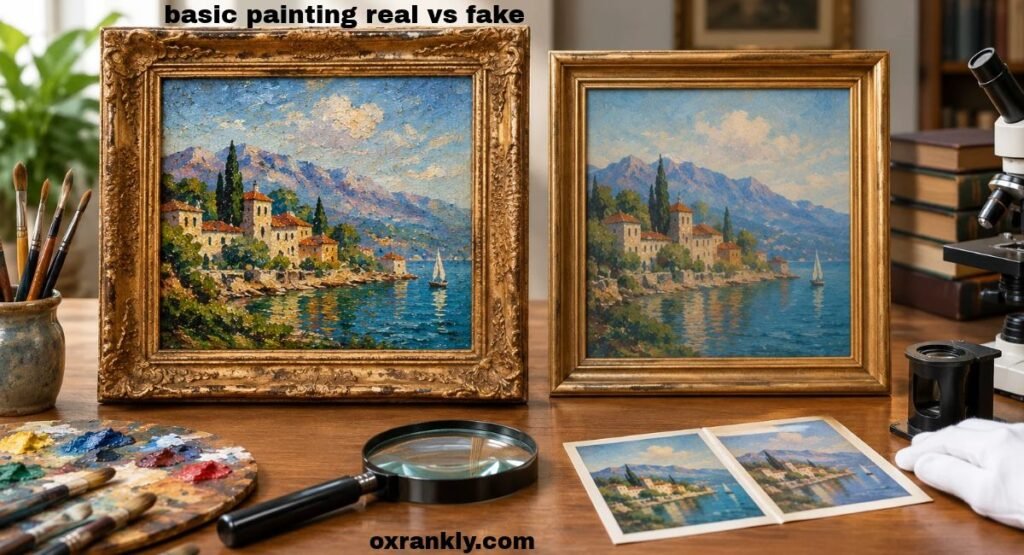

Introduction to Basic Painting Real vs Fake
Art has been an important part of human culture for centuries. Paintings can represent history, emotions, imagination, nature, and everyday life. Some paintings become valuable because of the artist who created them, the materials used, their historical importance, or their artistic quality. However, not every painting that looks valuable is authentic. Some artworks are reproductions, while others may be falsely presented as original pieces. Understanding basic painting real vs fake differences can help art lovers, collectors, students, and beginners make more informed decisions when looking at paintings.
The difference between a real and fake painting is not always obvious. A reproduction can look remarkably similar to an original, particularly when viewed from a distance or displayed behind glass. Modern printing technology, skilled imitation, and artificial aging techniques can make some copies difficult to identify without professional assistance. Even people who appreciate art may struggle to distinguish an authentic painting from a convincing imitation.
Learning about painting authenticity does not require years of professional experience. Beginners can start by examining the artwork’s surface, materials, signature, background information, and overall condition. These observations cannot prove authenticity on their own, but they can help identify warning signs and determine when further investigation is necessary.
This guide explores basic painting real vs fake identification methods, common differences between original artworks and imitations, the importance of provenance, and practical steps to take before purchasing an expensive painting. By understanding these factors, readers can develop a stronger appreciation for genuine art and avoid some common mistakes.
What Does a Real Painting Mean
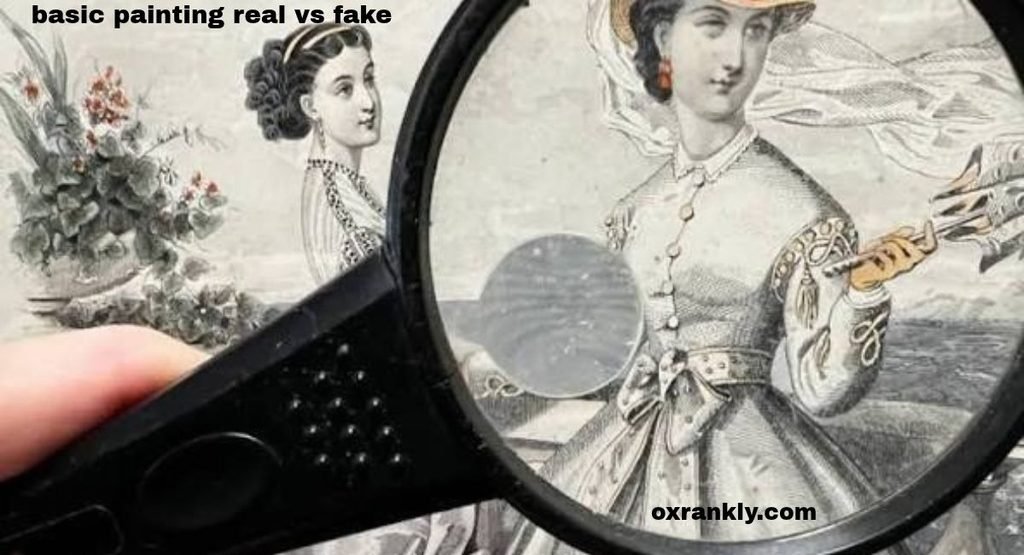
A real painting generally refers to an artwork that is authentic to its claimed creator, period, or artistic origin. For example, if a painting is advertised as an original work by a particular artist, its authenticity depends on whether the artist actually created it or whether the attribution is otherwise justified.
An original painting is different from a reproduction. An original is an artwork created as an individual artistic work, while a reproduction is a copy made to represent an existing image. Reproductions can be produced through printing, photography, painting by another artist, or other techniques.
However, the word real can have different meanings depending on the context. A hand-painted copy is still a real painting in the literal sense, but it is not necessarily an original work by the famous artist it imitates. Similarly, an authorized print can be a legitimate artwork without being an original oil painting.
Understanding this distinction is important when researching basic painting real vs fake questions. Authenticity is not simply about whether paint has been applied to a canvas. It also concerns the artist’s identity, the work’s history, and the accuracy of the claims made about it.
Collectors should therefore ask what exactly is being sold. Is it an original painting, a signed edition, an authorized reproduction, or an imitation being marketed as an original? Knowing the answer helps establish realistic expectations about its artistic and financial value.
What Is a Fake Painting
A fake painting is generally an artwork that has been created or altered to deceive people about its origin, creator, age, or authenticity. It may imitate the style of a famous artist and be presented as an original work when the claimed attribution is false.
Some forgeries are produced by highly skilled painters who understand the techniques, colors, and compositions associated with particular artists. Others rely on superficial similarities, such as copying a recognizable image or reproducing a signature.
Not every imitation is fraudulent. Artists regularly create works inspired by older styles, and students often copy famous paintings as part of their education. Such works become problematic when someone deliberately misrepresents them as originals or conceals their true origin to mislead a buyer.
A fake painting may also involve a genuine older artwork that has been falsely attributed to a famous artist. In this case, the painting itself may be old, but the claim about who created it is inaccurate.
This is why a careful examination should consider more than appearance. A convincing image, old-looking frame, or handwritten signature cannot establish that a painting is authentic. Reliable identification requires several pieces of evidence to support the artwork’s claimed identity.
Basic Painting Real vs Fake The Main Differences
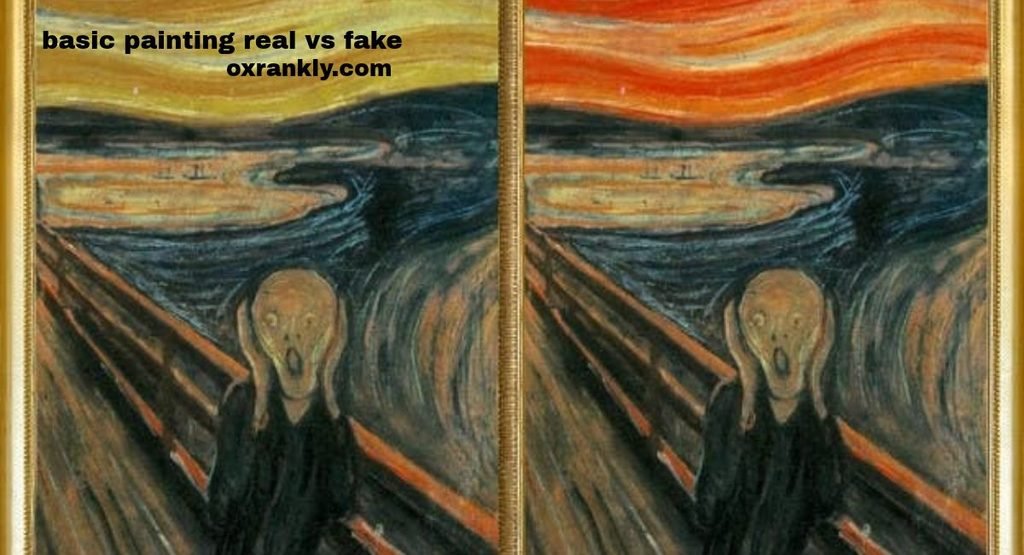
The most useful starting point is to compare the evidence available for an artwork rather than relying on one visual feature.
| Feature | Potential signs of an authentic painting | Potential warning signs |
|---|---|---|
| Brushwork | Consistent with the artist’s known technique | Unusual marks or inconsistent execution |
| Materials | Compatible with the claimed period and method | Materials that appear inconsistent with the claimed age |
| Signature | Supported by other evidence | Signature appears added, copied, or inconsistent |
| Provenance | Credible ownership and exhibition records | Missing, contradictory, or unverifiable history |
| Condition | Wear consistent with documented history | Suspicious aging or unexplained alterations |
| Composition | Matches the artist’s established methods | Details that conflict with known examples |
| Documentation | Relevant and independently verifiable records | Vague certificates or unsupported claims |
These differences are useful indicators, not absolute rules. Genuine paintings can have unusual signatures, repaired surfaces, missing paperwork, or unexpected materials. Likewise, sophisticated forgeries can reproduce many features convincingly.
The purpose of this comparison is to identify questions worth investigating. If several details seem inconsistent, a buyer should seek a professional opinion before making an expensive purchase.
Examine the Brushwork Carefully
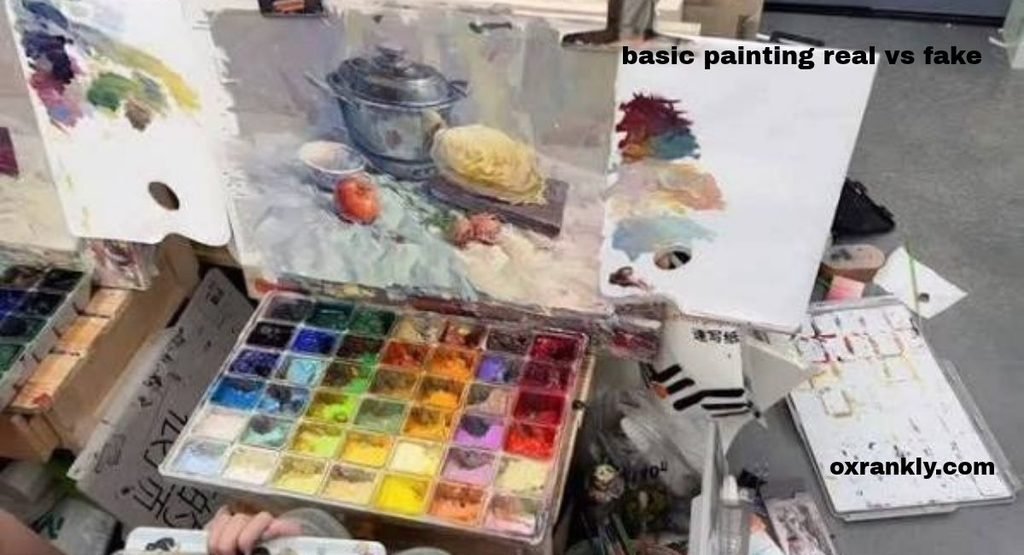
Brushwork is one of the first features to consider when comparing an original painting with a suspected imitation. Artists often develop distinctive ways of applying paint. Some use short, energetic strokes, while others create smooth transitions, delicate lines, or thick layers of pigment.
When examining a painting, look at how the paint moves across the surface. Consider whether the strokes appear confident, deliberate, and consistent with the artist’s established technique. Notice how the artist handles shadows, highlights, edges, and small details.
A suspected fake may reproduce the general appearance of an artwork without capturing the original painter’s particular approach. For example, a painting may have the correct colors but lack the texture or movement associated with the artist’s other works.
However, brushwork alone cannot establish authenticity. A skilled forger may imitate a painter’s technique, and an authentic artist may use different methods at different points in their career. A painting may also have been retouched or restored, changing some of its original brushwork.
Beginners should compare the artwork with well-documented examples from the same artist and, where possible, the same period. The goal is to identify meaningful similarities and inconsistencies rather than expecting every authentic painting to look identical.
Check the Paint and Canvas Materials
Materials can provide valuable information about when and how a painting was created. Artists have used different pigments, binders, grounds, canvases, wood panels, and other supports throughout history.
For example, a painting claimed to be several centuries old may raise questions if laboratory analysis identifies a material that was introduced much later. Such a discovery can challenge the claimed date, although the exact interpretation depends on the material and the circumstances.
The type of support also matters. Some artists traditionally worked on wooden panels, while others frequently used canvas or paper. These preferences may provide useful context, but artists sometimes experimented with different surfaces, so an unfamiliar support does not automatically indicate a fake.
Ordinary visual inspection has limitations. Paintings can contain layers added during restoration, and some materials are difficult to identify without specialist equipment. Even an apparently old canvas does not prove that the image painted on it is equally old.
Professional conservators and technical specialists can use methods such as pigment analysis, microscopy, ultraviolet examination, infrared imaging, and radiography when appropriate. These techniques may reveal later additions, hidden compositions, or materials inconsistent with the claimed period.
Material evidence is strongest when it agrees with the painting’s documented history and artistic characteristics. It should not be interpreted in isolation.
Investigate the Artist’s Signature
A signature can help connect a painting to an artist, but it is not proof of authenticity by itself. Many genuine paintings are unsigned, while forged works may carry convincing signatures copied from photographs or other artworks.
Start by considering where the signature appears. Does its placement seem consistent with the artist’s documented practice? Is the handwriting similar to signatures on authenticated works from a comparable period? Does the signature appear integrated into the painting, or does it seem visually different from the surrounding surface?
These questions can guide further investigation, but none provides a definitive answer. Artists change their signatures over time, and restoration may affect the appearance of the paint around them.
The materials used for the signature can also matter. If technical examination suggests that the signature was added after the painting’s main surface had aged, that finding may require closer attention. However, later inscriptions can sometimes be legitimate, and the timing of a signature needs careful interpretation.
In the basic painting real vs fake process, the signature should be treated as one part of a larger assessment. A convincing signature cannot compensate for an implausible history, incompatible materials, or major inconsistencies in the artwork.
Buyers should be particularly cautious when a seller presents the signature as the only evidence that a painting belongs to a famous artist.
Research the Painting’s Provenance
Provenance is the documented history of an artwork’s ownership. It may include previous owners, auction records, exhibition catalogues, gallery inventories, inheritance documents, and correspondence relating to the painting.
A strong provenance can support authenticity by establishing a credible connection between the artwork and its claimed creator. For example, historical records might identify a painting in an exhibition catalogue and later document its ownership by a known collector.
However, provenance is not always complete. Many genuine paintings have gaps in their ownership history, especially works that have remained in private collections for generations. Missing documentation does not automatically mean a painting is fake.
The important question is whether the available history is plausible and independently verifiable. Dates should make sense, ownership claims should be consistent, and documents should correspond to the specific artwork being examined.
Be careful with vague statements such as “owned by a famous collector” or “passed down through a royal family” when no supporting evidence is provided. Such stories can make an artwork sound more valuable without actually proving anything.
When possible, request copies of historical records and confirm them through reliable archives, auction houses, galleries, or qualified specialists. Provenance research is often one of the most useful ways to distinguish a credible attribution from an unsupported claim.
Look at the Painting’s Age and Condition
Age can influence an artwork’s appearance. Over time, paintings may develop cracks, discoloration, surface wear, changes in varnish, and other signs of deterioration. The exact changes depend on the materials, environment, storage conditions, and previous restoration.
Some forgers attempt to make new paintings appear old by artificially distressing their surfaces. They may introduce cracks, discolor the varnish, or damage the edges to create the impression of age.
Nevertheless, cracks and discoloration are not reliable proof of authenticity. A genuine painting may be in excellent condition because it has been carefully stored, while a fake may have been deliberately aged.
Examine the overall condition rather than focusing on one feature. Does the wear appear consistent across the surface? Are there unusual areas of damage? Does the frame’s history match the painting’s documentation? Do repairs or alterations appear to have been disclosed?
A professional conservator can help determine whether the condition is consistent with the painting’s materials and claimed history. This is especially valuable when the work is expensive or described as historically significant.
Remember that restoration is common in the art world. A painting can remain authentic even if its varnish has been replaced, damaged areas have been repaired, or some sections have been retouched.
Compare the Composition With Known Works
Composition refers to the arrangement of subjects, shapes, colors, and visual elements within a painting. Studying composition can help identify whether an artwork fits an artist’s established style.
Compare the painting with authenticated examples by the same artist. Consider the proportions of the figures, the placement of objects, the treatment of backgrounds, the direction of light, and the relationship between foreground and background elements.
An imitation may reproduce the overall design while introducing subtle differences. A figure’s proportions may look unusual, an architectural detail may be incorrect, or the perspective may differ from the artist’s known approach.
Historical context is also important. Artists develop their styles over time, and a work from their early career may look quite different from one created decades later. Comparing an early painting with a much later example may therefore produce misleading conclusions.
There is another important distinction: an authentic artist may have created several versions of a similar composition, and a studio assistant may have helped produce a work under the artist’s direction. These situations require careful consideration of attribution rather than a simple real-or-fake judgment.
Composition provides useful evidence, but it works best alongside technical analysis, provenance, and expert evaluation.
Understand the Role of Frames and Labels
Frames, gallery labels, exhibition stickers, and inscriptions can offer clues about a painting’s history. An old frame may have been associated with a particular period or location, while a label might identify a gallery that once handled the work.
However, frames can be replaced, transferred between paintings, or deliberately selected to make an artwork appear more important. A genuinely old frame does not establish that the painting inside it is authentic or equally old.
Labels also need verification. A gallery name or exhibition sticker may look convincing without establishing a reliable connection to the artwork. Historical records, photographs, catalogues, and archival documentation can help determine whether the label is genuine and relevant.
Inspect the back of the painting when it is safe to do so. There may be inventory numbers, handwritten notes, stamps, canvas markings, or evidence of previous mounting. These details can provide useful research leads.
Avoid removing a painting from its frame or handling a fragile object without professional guidance. Valuable works can be damaged easily, and even a small intervention may affect their condition.
The frame and labels should be treated as supporting evidence, not as a substitute for investigating the painting itself.
Be Careful With Certificates of Authenticity
A certificate of authenticity is a document intended to support claims about an artwork’s identity, creator, or origin. Depending on the circumstances, it may be issued by an artist, gallery, expert, estate, or another organization.
Certificates vary considerably in reliability. Some are supported by substantial research, while others contain little more than a description of the painting and the seller’s claims.
Before relying on a certificate, check who issued it, what evidence was considered, and whether the issuing party has relevant expertise. Confirm that the document refers to the exact painting being offered, including its title, dimensions, medium, and identifying photographs where available.
Also consider whether the issuer has a financial interest in the sale. A certificate from someone who benefits directly from the transaction may require independent verification.
A document can be genuine without its conclusions being correct. Likewise, a painting may be authentic even when no certificate exists.
For an expensive artwork, consider seeking an independent opinion from a qualified art historian, specialist, conservator, or recognized authentication body with relevant expertise. Ask whether the opinion is formal, provisional, or limited by the evidence available.
The most reliable assessment usually combines documentation, technical findings, stylistic analysis, and a credible ownership history.
Use Technology to Examine Paintings
Modern technology has improved the ways experts investigate painting authenticity. Scientific examination can reveal details that are difficult or impossible to see with the naked eye.
Ultraviolet imaging may help identify certain varnishes, repairs, and areas of retouching. Infrared reflectography can sometimes reveal underdrawings or changes beneath the visible paint. X-ray imaging may show differences in paint layers, hidden compositions, or the construction of a painting.
Microscopic examination can help specialists study brushwork, pigments, cracks, and the relationship between different layers. Laboratory analysis may also identify materials that are inconsistent with a claimed date.
Digital image comparison can help locate similarities and differences between a painting and documented examples. However, photographs may distort colors, conceal surface texture, or omit important details, so digital comparison cannot replace an in-person examination when the stakes are high.
Artificial intelligence tools may assist researchers in comparing visual features or organizing information, but their conclusions should not be treated as definitive proof. A system may misclassify a work because of poor image quality, unusual artistic techniques, or limited training data.
Technology is most effective when used by knowledgeable specialists who understand the limits of each method. Scientific findings must be interpreted alongside historical and artistic evidence.
Recognize Common Warning Signs When Buying Art
Buying a painting can be an enjoyable experience, but buyers should remain cautious when an offer appears unusually attractive or lacks clear documentation.
One warning sign is a seller who claims to possess an extremely valuable original painting but offers no credible explanation of its history. Another is pressure to pay immediately before the buyer can arrange an independent assessment.
Be cautious when the seller relies heavily on dramatic stories, celebrity connections, or claims that the painting was discovered in an extraordinary location. Such details may be true, but they should be supported by evidence.
Other warning signs include inconsistent dimensions, missing or altered documentation, unexplained differences between photographs, and reluctance to permit reasonable inspection. An unusually low price does not prove that a painting is fake, but it may justify additional questions.
Before purchasing, request a written description of the work, including its attributed artist, medium, dimensions, condition, and any known restoration. Ask whether the seller is offering an original, a reproduction, or a work attributed to the artist but not conclusively authenticated.
For higher-value purchases, consider an independent appraisal and written terms that clearly describe the seller’s authenticity claims and any applicable return arrangements.
A careful buyer does not need to reject every unusual offer. Instead, the buyer should make sure that the available evidence justifies the price and the claims being made.
Can Beginners Identify a Fake Painting?
Beginners can learn to recognize potential warning signs, but accurately authenticating a valuable painting is a specialized task.
A beginner can start by comparing the artwork with reliable photographs of authenticated works, examining the signature, reviewing the available ownership history, and checking whether the materials appear consistent with the claimed period. These steps can reveal obvious inconsistencies and help determine whether professional advice is necessary.
It is also useful to learn basic art history. Understanding the periods in which particular pigments, painting supports, and artistic techniques became common can help identify questions about a painting’s claimed age.
However, beginners should avoid treating personal impressions as definitive conclusions. A painting that looks strange may still be genuine, and an imitation that looks convincing may still be fraudulent.
Experts combine several kinds of evidence and often acknowledge uncertainty when the available information is insufficient. Some paintings remain disputed even after extensive research.
The best approach is to develop observation skills while understanding their limits. Learning to ask the right questions is a valuable first step toward making informed decisions about art.
Real Painting vs Fake Painting: The Difference Between Copies and Forgeries
Copies and forgeries are not the same thing. A copy may be created for educational purposes, personal enjoyment, decoration, or legitimate commercial sale. A forgery generally involves deception about the artwork’s identity, authorship, or history.
For example, an artist might create a hand-painted version of a famous landscape and clearly identify it as a modern interpretation. That work can be a legitimate painting even though another artist created the original composition.
A forgery occurs when someone deliberately presents an imitation as an original by the famous painter, intending to mislead a buyer or another audience.
Reproductions can also be legitimate when they are accurately described. A printed image of a renowned painting may be an affordable way to enjoy art at home. It simply should not be confused with an original work created by the artist.
This distinction matters because value depends on what the artwork actually is. A reproduction may have decorative or sentimental value, while an original may carry artistic, historical, and financial significance.
In discussions about basic painting real vs fake, it is therefore essential to distinguish between an imitation that is honestly represented and a forgery designed to deceive.
Why Authentic Paintings Can Be Valuable
Authentic paintings can have financial, cultural, historical, and emotional value. The importance of an artwork depends on several factors, and authenticity is only one of them.
The artist’s reputation may influence demand, particularly when the work represents an important period in their career. Historical significance, rarity, subject matter, condition, exhibition history, and provenance can also affect market interest.
However, an authentic painting is not automatically expensive. Many genuine works by lesser-known artists are affordable, while certain reproductions by popular artists may sell for substantial amounts as authorized editions.
Market prices can also change according to collecting trends, economic conditions, and the availability of comparable works. A painting’s estimated value is therefore not a guaranteed resale price.
Authenticity helps establish what an artwork is, but valuation requires a separate assessment. An art appraiser may compare similar sales, examine the artist’s market, and consider the painting’s condition and documentation.
Buyers should be wary of anyone who promises a high future resale price without credible supporting evidence. The best purchase decisions combine an appreciation of the artwork with realistic expectations about its financial value.
How to Protect Yourself Before Purchasing a Painting
A practical buying process can reduce the risk of purchasing a falsely attributed artwork. The appropriate level of investigation depends on the price, the seller’s claims, and the painting’s significance.
Start by establishing exactly what is being offered. Confirm the artist’s name, title, medium, dimensions, date if known, and whether the work is described as an original, a copy, or an attribution.
Next, ask for documentation. Relevant records may include previous sales, gallery paperwork, exhibition history, restoration reports, and other evidence connecting the painting to its claimed origin.
Inspect the artwork carefully, paying attention to its surface, materials, signature, condition, and any signs of alteration. Compare it with authenticated examples, but do not rely on visual resemblance alone.
If the painting is expensive, seek an independent professional assessment before paying. Choose someone with expertise in the relevant artist, period, and medium rather than relying entirely on a general appraisal.
Review the seller’s terms in writing. Understand what guarantees are being made, what happens if significant claims prove incorrect, and whether the seller permits an independent inspection.
Finally, keep copies of invoices, photographs, reports, and correspondence. These records can help establish your own ownership history and may be useful for insurance, resale, or future research.
Common Myths About Real and Fake Paintings
Several common misconceptions make painting authentication more difficult than it needs to be.
An old painting must be authentic.
Age and authenticity are separate questions. An old painting may be a copy, a later imitation, or a genuine work by an artist other than the one claimed.
A signature proves who painted the artwork.
Signatures can be copied, added later, or incorrectly interpreted. They need to be considered alongside other evidence.
A certificate guarantees authenticity.
The reliability of a certificate depends on the issuer, the research performed, and the strength of the supporting evidence.
Every authentic painting has a complete ownership history.
Historical records are often incomplete, especially for artworks held privately for long periods. Missing records may create uncertainty without proving fraud.
Experts can always identify a fake immediately.
Some cases require extensive research, laboratory analysis, and consultation with specialists. Others remain unresolved because the evidence is inconclusive.
A visually perfect copy is equivalent to an original.
A copy can have excellent craftsmanship and decorative appeal, but its authorship and historical significance remain different from those of the original.
Understanding these myths helps buyers approach art with curiosity and reasonable caution instead of relying on simplistic rules.
The Importance of Expert Authentication
Expert authentication becomes particularly important when a painting is expensive, historically significant, or attributed to a widely collected artist.
Different specialists contribute different kinds of knowledge. Art historians may study style, artistic development, and historical records. Conservators can examine condition, materials, and restoration. Scientific laboratories may analyze pigments, supports, and paint layers. Provenance researchers investigate ownership and documentary evidence.
A comprehensive assessment may require cooperation among several specialists. No single method answers every question, and the most useful conclusions emerge when independent lines of evidence support one another.
It is also important to understand the language used in professional opinions. A work described as “attributed to” an artist may have uncertain authorship, while “workshop of” or “circle of” can communicate different levels of association. The precise meaning depends on the cataloguing conventions being used.
Before commissioning an assessment, ask about the specialist’s experience, the scope of the examination, the evidence they will consider, and whether the resulting opinion will be written. Also clarify any limitations, fees, and potential conflicts of interest.
Professional authentication may cost money, but it can be worthwhile when the financial or historical stakes are substantial. It helps replace guesswork with a more systematic evaluation.
Conclusion Understanding Basic Painting Real vs Fake
Learning about basic painting real vs fake differences is an important step toward becoming a more informed art enthusiast or collector. Authenticity involves much more than a convincing appearance, a recognizable signature, or an old frame. It requires a careful examination of the artwork’s style, materials, condition, provenance, and supporting documentation.
Beginners can develop useful observation skills by comparing paintings with authenticated examples, researching the artist, reviewing ownership records, and recognizing common warning signs. These steps can help identify questions that deserve closer attention, although they cannot replace a professional assessment when a painting is valuable or its authenticity is disputed.
It is equally important to understand that copies, reproductions, and forgeries are different categories. A reproduction can be entirely legitimate when honestly described, while a forgery involves misleading claims about the work’s identity or origin.
Ultimately, the best way to approach painting authenticity is with curiosity, patience, and a willingness to examine the evidence. Do not rely on a single visual clue or accept extraordinary claims without verification. When necessary, consult qualified specialists who can combine artistic knowledge, historical research, and scientific analysis.
By applying these principles, you can better understand the difference between an original artwork and an imitation, make more confident purchasing decisions, and appreciate the craftsmanship and history that make paintings meaningful.




Pingback: Best Houston Attractions Top Places to Visit for an Unforgettable Experience- oxrankly.com