


Introduction to Trend Technology Solutions
Technology continues to transform the way people work, communicate, learn, shop, and manage businesses. From artificial intelligence to cloud computing, modern innovations are creating opportunities for organizations to improve productivity, reduce operational costs, and deliver better services. In this changing environment, trend technology solutions have become an important topic for companies, entrepreneurs, professionals, and individuals who want to understand the future of digital transformation.
The term trend technology solutions refers to modern technological approaches, digital tools, software systems, and innovative services that address current challenges and help organizations prepare for future demands. These solutions can include automation platforms, advanced data analytics, cybersecurity systems, cloud infrastructure, mobile applications, and intelligent business management software. Each technology serves a different purpose, but the overall objective is to make processes more efficient, secure, flexible, and accessible.
Businesses of different sizes are adopting digital solutions to remain competitive in their industries. Small businesses use online platforms to reach customers, while large enterprises rely on sophisticated information systems to coordinate employees, analyze performance, and manage complex operations. Technology is no longer limited to specialist departments. It has become an essential part of marketing, finance, customer service, education, healthcare, manufacturing, and almost every other major industry.
Understanding trend technology solutions is therefore valuable for anyone interested in digital development. Organizations that recognize useful technological trends can make better investment decisions, respond to changing customer expectations, and create more effective working environments. However, successful technology adoption requires more than purchasing the newest software. It involves identifying genuine problems, selecting appropriate tools, training employees, protecting information, and measuring results.
This article explores the major technological trends shaping modern organizations, explains their practical applications, and examines how businesses can implement innovative solutions responsibly. It also discusses common challenges, future opportunities, and the importance of balancing technological progress with human judgment.
Understanding Trend Technology Solutions
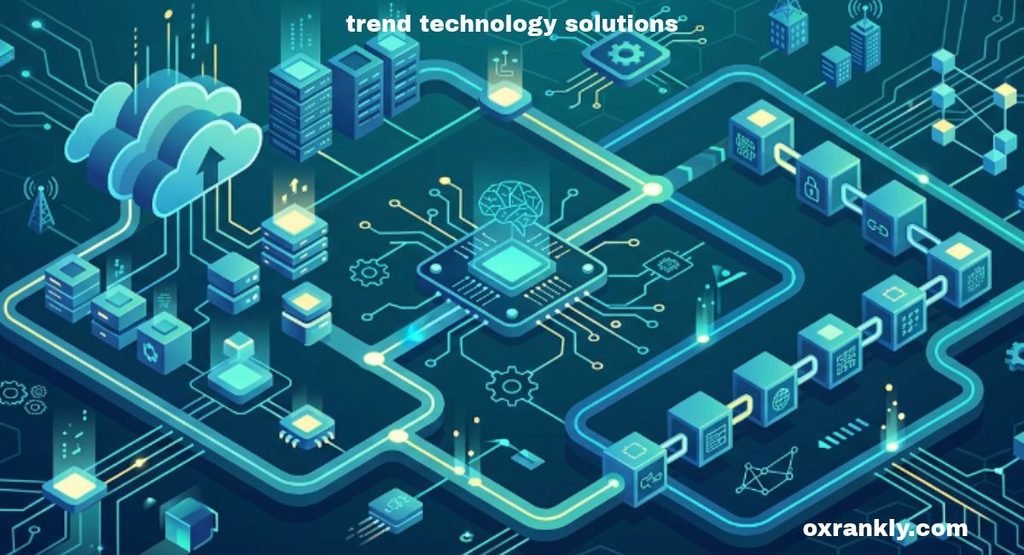
Trend technology solutions can be understood as practical applications of emerging or increasingly adopted technologies that help solve problems and improve performance. They may involve entirely new systems or improvements to existing digital infrastructure. The most useful solutions are those that provide measurable benefits rather than simply following popular trends.
For example, a business that manages customer information manually may introduce a customer relationship management system. This software can organize contact details, record customer interactions, track sales opportunities, and help employees respond more efficiently. Similarly, a company that experiences frequent communication problems may introduce cloud-based collaboration tools that allow teams to share documents and coordinate projects.
The best solution depends on the organization’s objectives, budget, technical capabilities, and customers’ needs. A small retail business may benefit more from a reliable inventory management system than from an expensive artificial intelligence platform. A financial services company, by contrast, may require advanced fraud detection and stronger identity verification.
Another important characteristic of technology solutions is their ability to evolve. Digital systems must be maintained, updated, and evaluated as business requirements change. A solution that works well today may need additional features, stronger security, or improved integration in the future.
Organizations should therefore approach technology as an ongoing process rather than a single purchase. They need to understand the problems they want to solve, compare available options, test promising systems, and review their performance regularly. This approach makes technology investments more practical and sustainable.
Artificial Intelligence and Intelligent Automation
Artificial intelligence has become one of the most influential developments in modern technology. AI systems can analyze information, identify patterns, generate content, summarize documents, and assist with certain decision-making tasks. When used appropriately, these capabilities can help organizations complete routine work more efficiently.
Businesses can use AI-powered customer support systems to answer common questions, organize service requests, and direct complicated issues to human representatives. Marketing teams can use AI tools to brainstorm campaign ideas, study customer preferences, and analyze the performance of different messages. Administrative departments can apply intelligent tools to summarize meetings, classify documents, and organize large volumes of information.
Automation complements artificial intelligence by allowing repetitive tasks to be completed with less manual intervention. For example, an automated workflow might send an invoice after an order is approved, notify a manager when inventory becomes low, or update a project record when a task is completed.
However, automation does not mean that every business process should operate without human involvement. AI systems can make mistakes, misunderstand context, or produce information that appears convincing but is inaccurate. Organizations should establish review procedures for important decisions, especially those involving finances, personal information, employment, or legal responsibilities.
Successful AI adoption begins with identifying suitable tasks. Companies should start with activities that are repetitive, clearly defined, and relatively easy to evaluate. They can then measure whether the technology reduces processing time, improves accuracy, or increases customer satisfaction.
By combining intelligent automation with human expertise, trend technology solutions can help businesses improve efficiency while preserving accountability and professional judgment.
Cloud Computing and Flexible Digital Infrastructure
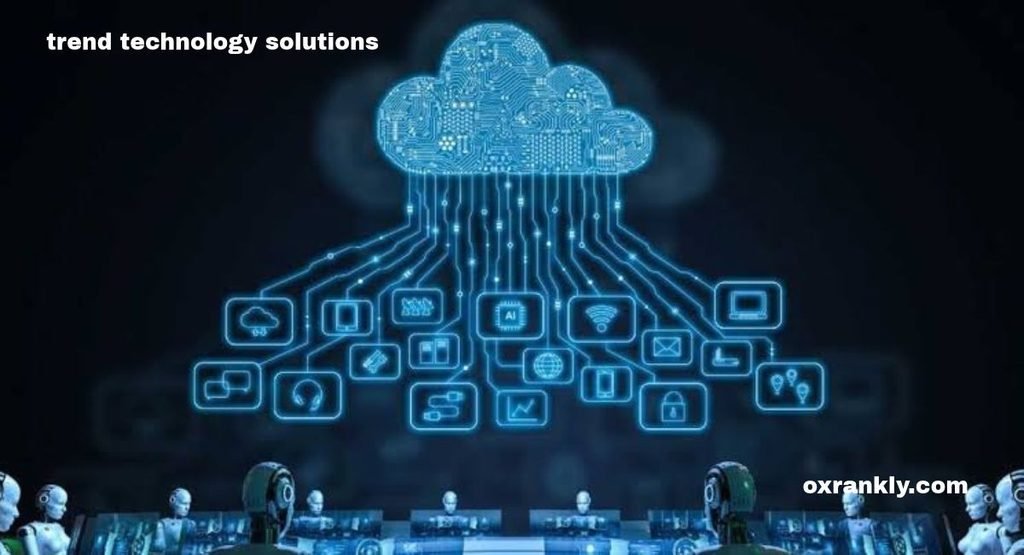
Cloud computing allows organizations to access computing resources, applications, databases, and storage through internet-connected services rather than relying exclusively on physical equipment located in their own offices. This approach can make technology more flexible and easier to expand as business needs change.
One major advantage of cloud computing is scalability. A company can often increase its computing capacity when demand rises and reduce it when fewer resources are needed. This flexibility can be useful for online stores, publishing platforms, software companies, and organizations that experience seasonal changes in activity.
Cloud services can also support collaboration. Employees working from different locations can access authorized documents, share updates, and coordinate projects without depending entirely on office-based systems. Teams can work across different time zones while maintaining access to shared information.
Another benefit is the opportunity to reduce some infrastructure management responsibilities. Depending on the service model, a cloud provider may manage hardware, system maintenance, backups, or parts of the security infrastructure. Nevertheless, organizations remain responsible for understanding access controls, protecting sensitive data, and configuring their systems correctly.
Cloud computing also introduces challenges. Unexpected usage can increase costs, poor configurations may expose information, and dependence on a particular provider can make migration difficult. Internet connectivity and service availability must also be considered when selecting cloud-based applications.
Businesses should evaluate providers according to security features, reliability, support, pricing, compliance requirements, and compatibility with existing systems. A clear cloud strategy helps organizations obtain the benefits of flexible infrastructure without creating unnecessary complexity.
Cybersecurity and Digital Protection

Cybersecurity is a critical part of modern digital infrastructure because businesses increasingly depend on connected systems to store information, process payments, communicate with customers, and manage everyday operations. As technology adoption increases, organizations must also address risks such as data theft, phishing attacks, ransomware, unauthorized access, and online fraud.
Effective cybersecurity involves multiple layers of protection. Firewalls can help control network traffic, antivirus software can identify malicious programs, and encryption can protect information from unauthorized access. Multi-factor authentication adds another verification step when users sign in to important accounts. Regular software updates also help address known security weaknesses.
Businesses should understand that cybersecurity is not solely a technical responsibility. Employees can unintentionally expose systems by clicking suspicious links, downloading unsafe attachments, or sharing confidential information with the wrong person. Regular training helps workers recognize common threats and follow safer digital practices.
Another important measure is creating reliable backups. If a company experiences a ransomware attack, hardware failure, or accidental data deletion, accessible and tested backups can support recovery. Organizations should establish procedures for responding to security incidents and identifying who is responsible for managing them.
Modern security solutions may also use artificial intelligence to identify unusual activity and prioritize potential threats. However, automated systems need appropriate configuration and human oversight. Security teams must investigate alerts, evaluate their seriousness, and respond according to established procedures.
For businesses adopting trend technology solutions, cybersecurity should be included from the beginning rather than added after problems occur. Protecting customer trust, business records, and operational systems is essential for long-term digital success.
Data Analytics and Smarter Business Decisions
Data has become an important resource for organizations seeking to understand customers, improve operations, and identify opportunities. Businesses generate information through sales transactions, website visits, customer inquiries, advertising campaigns, inventory systems, and other everyday activities. Data analytics helps transform this information into useful insights.
For example, an online retailer can analyze purchasing patterns to identify popular products and understand when customers are most likely to place orders. A digital publisher can study website performance to discover which topics attract readers, which pages encourage visitors to explore additional content, and where users tend to leave the site.
These insights can support better planning. Instead of relying entirely on assumptions, managers can use measurable information to compare performance and identify areas that need improvement.
Several types of analytics serve different purposes. Descriptive analytics explains what has already happened. Diagnostic analytics investigates why a particular result occurred. Predictive analytics estimates possible future outcomes, while prescriptive analytics helps evaluate potential actions.
However, reliable analysis depends on reliable data. Incomplete records, duplicate entries, outdated information, and inconsistent measurement methods can produce misleading conclusions. Businesses should establish clear data collection standards and review the quality of their information regularly.
Privacy is equally important. Organizations should collect only the information they legitimately need, protect it appropriately, and follow applicable privacy requirements. Employees should have access only to the information necessary for their responsibilities.
When implemented responsibly, analytics helps organizations recognize patterns, reduce uncertainty, and make decisions that align with business objectives.
Internet of Things and Connected Devices
The Internet of Things, commonly known as IoT, refers to physical devices equipped with sensors, software, and connectivity that allow them to collect or exchange information. These devices can include industrial machines, smart meters, environmental sensors, wearable devices, security cameras, and connected household equipment.
In manufacturing, IoT sensors can monitor equipment temperature, vibration, and operating conditions. By identifying unusual patterns, maintenance teams may discover potential problems before a machine fails. This approach can reduce unexpected downtime and improve the planning of maintenance activities.
In logistics, connected sensors can help businesses monitor the location or condition of certain shipments. Temperature monitoring can be especially valuable for products that require controlled storage conditions, including some foods and medical supplies.
Smart buildings provide another example. Connected lighting, heating, and energy monitoring systems can help facility managers understand energy consumption and adjust equipment according to occupancy or environmental conditions.
Nevertheless, connected devices introduce security and management challenges. Every device can potentially become an entry point into a larger network if it is poorly configured or no longer receives security updates. Organizations must consider device authentication, network separation, software maintenance, and data protection.
IoT is most valuable when the information collected leads to a practical improvement. Installing sensors without a clear purpose can increase costs without delivering meaningful results. Businesses should identify the operational problem first and then determine whether connected devices offer an effective solution.
Digital Transformation and Business Process Improvement
Digital transformation involves using technology to improve how an organization operates, delivers services, and creates value for customers. It is broader than simply replacing paper documents with digital files. Effective transformation may require changes to workflows, employee responsibilities, customer experiences, and management practices.
Consider a business that processes customer orders manually. Employees may receive requests through email, copy details into spreadsheets, check inventory separately, and contact customers individually. This process can create delays and increase the likelihood of errors.
An integrated order management system can bring these activities together. Orders can be recorded centrally, inventory can be updated automatically, and customers can receive status notifications. Employees gain a clearer view of operations, while managers can monitor performance more easily.
Digital transformation can also improve internal communication. Project management software helps teams assign responsibilities, establish deadlines, track progress, and share relevant documents. Document management platforms can make records easier to organize, retrieve, and protect.
However, successful transformation requires employee participation. Workers may resist unfamiliar systems when they do not understand their benefits or fear that new technology will make their roles less secure. Clear communication, practical training, and opportunities to provide feedback can reduce these concerns.
Organizations should avoid changing every process at once. A phased approach allows teams to test new systems, identify problems, and improve implementation before expanding across the business.
The purpose of digital transformation is not to make an organization appear technologically advanced. It is to create more reliable processes, improve service quality, and help people perform their work effectively.
Mobile Technology and Digital Customer Experiences
Mobile technology has changed the way customers discover products, communicate with businesses, access information, and complete transactions. Smartphones allow users to browse websites, make payments, receive notifications, and interact with companies from almost anywhere.
For businesses, mobile-friendly services can improve accessibility and convenience. A responsive website adjusts its layout to different screen sizes, making articles, product pages, forms, and menus easier to use on smartphones and tablets.
Mobile applications can offer additional features, including personalized notifications, account management, loyalty programs, and location-based services. However, building a dedicated application is not always necessary. For many small businesses, a fast, responsive website provides sufficient functionality at a lower cost.
Customer experience also depends on performance. Slow-loading pages, confusing navigation, intrusive pop-ups, and complicated checkout procedures can discourage visitors. Businesses should regularly test their digital services on different devices and internet connections.
Accessibility is another important consideration. Clear text, sufficient color contrast, readable font sizes, descriptive image text, and straightforward navigation can help more people use digital platforms comfortably.
For online publishers and blogs, mobile usability is particularly significant because readers may discover articles through search engines, social media, or other digital channels. Organized headings, short paragraphs, and well-structured pages make content easier to read.
Mobile-focused technology solutions help organizations reach customers where they already spend much of their digital time, while providing services that are convenient and accessible.
Low Code and No Code Development Platforms
Traditional software development often requires programming expertise, specialized tools, and considerable time. Low-code and no-code platforms offer alternative approaches that allow applications and workflows to be created with visual interfaces, reusable components, and prebuilt integrations.
Low-code platforms reduce the amount of manual programming required, while no-code platforms are designed to let users create certain applications without writing code. These approaches can be useful for internal dashboards, simple business applications, approval workflows, customer forms, and automated reporting.
A small company might use a visual platform to build an employee leave request system. A marketing department could create a workflow that organizes incoming inquiries and assigns them to appropriate team members. A nonprofit organization might develop a basic volunteer registration application.
These platforms can help teams test ideas quickly without committing to a lengthy development project. They also allow business specialists to contribute directly to digital improvement.
However, visual development tools have limitations. Complex applications may require custom programming, and certain platforms can make it difficult to move an application to another provider. Licensing costs, data security, integration options, and long-term maintenance should be considered before adoption.
Businesses must also establish governance rules. Allowing employees to build applications without oversight can create disconnected systems, duplicated information, or unexpected security risks.
Low-code and no-code tools work best when organizations clearly define their intended use and technical boundaries. They can accelerate innovation, but they should complement rather than replace sound software design and security practices.
Blockchain and Digital Trust
Blockchain is a type of distributed digital record system in which information is organized into linked blocks and protected through cryptographic techniques. Depending on its design, a blockchain network can allow multiple participants to maintain a shared record without relying entirely on a single central database.
One potential application is supply chain tracking. Organizations may use shared records to document product movements, ownership changes, or other transactions between participating parties. When properly implemented, these systems can make certain records easier to verify and audit.
Blockchain can also support some digital identity systems, asset records, and transaction processes. Smart contracts, which are programs that execute defined actions when specified conditions are met, can automate certain activities within compatible blockchain networks.
Nevertheless, blockchain is not automatically the best solution for every information management problem. Traditional databases may be cheaper, faster, and easier to operate when one trusted organization controls the information.
Blockchain systems can also face challenges involving scalability, energy consumption, governance, regulatory requirements, and the correction of inaccurate information. A record can be difficult to alter after it is added, but this does not guarantee that the original information was correct.
Organizations should evaluate blockchain according to the specific problem they need to solve. The technology is most useful when its particular characteristics provide a meaningful advantage over simpler alternatives.
Remote Work and Digital Collaboration
Remote and hybrid working arrangements have increased the importance of collaboration software. Employees may work from offices, homes, shared workspaces, or different countries while contributing to the same projects.
Video conferencing allows teams to hold meetings without requiring everyone to travel to one location. Shared documents enable several employees to contribute to the same material, while project management tools help coordinate deadlines, responsibilities, and progress.
Cloud-based collaboration can also improve continuity when employees are temporarily unable to access a physical workplace. Teams can maintain communication and continue important tasks when suitable systems and procedures are available.
However, digital collaboration requires thoughtful management. Too many meetings, excessive notifications, unclear responsibilities, and scattered communication channels can reduce productivity. Organizations should establish guidelines explaining where information belongs and which communication methods should be used for different purposes.
Data protection must also remain a priority. Employees should use approved applications, secure their devices, and follow organizational policies when accessing confidential information outside the office.
Managers should evaluate performance through meaningful outcomes rather than relying exclusively on visible online activity. Clear objectives, realistic deadlines, and regular feedback help employees understand expectations.
Technology can make distributed teams more effective, but successful collaboration still depends on trust, communication, leadership, and a healthy working environment.
Sustainable Technology and Energy Efficiency
Sustainability has become an important consideration in technology planning. Organizations are increasingly examining how digital infrastructure affects energy consumption, resource use, equipment waste, and operational costs.
Energy-efficient computers, optimized servers, smart building systems, and improved cooling methods can help reduce unnecessary electricity consumption. Cloud infrastructure may provide access to efficient shared resources, although the actual environmental impact depends on the provider, workload, location, and energy sources.
Businesses can also extend equipment lifecycles through appropriate maintenance, repairs, and responsible reuse. When devices can no longer be used safely or effectively, proper electronic waste recycling helps recover materials and reduces inappropriate disposal.
Software design can influence sustainability as well. Applications that use excessive processing power or transfer unnecessary amounts of data may require more resources than carefully optimized alternatives. Efficient programming and infrastructure planning can reduce waste while improving performance.
Artificial intelligence introduces additional considerations because training and running large models can require substantial computing resources. Organizations should evaluate whether a particular AI application delivers enough practical value to justify its operational demands.
Sustainable technology is not simply about purchasing equipment with an environmental label. It involves measuring resource use, improving efficiency, managing electronic waste, and selecting systems that meet long-term operational needs.
Benefits of Adopting Trend Technology Solutions
The benefits of modern technology depend on how effectively an organization selects and implements its systems. Nevertheless, several advantages can apply across different industries.
Improved productivity: Automation and integrated software can reduce repetitive administrative work, allowing employees to focus on tasks that require judgment, creativity, and specialized knowledge.
Better decision-making: Data analytics provides information that helps managers identify patterns, evaluate performance, and compare potential strategies.
Enhanced customer service: Digital communication channels, organized customer records, and self-service tools can make it easier to respond to questions and resolve common problems.
Greater flexibility: Cloud platforms and collaboration tools can support changing workloads, distributed teams, and new business requirements.
Stronger operational visibility: Connected systems can give managers a clearer understanding of inventory, projects, customer requests, and business performance.
Opportunities for innovation: Modern development tools allow organizations to test new ideas, improve existing services, and respond to changing customer expectations.
However, these benefits are not guaranteed. Poorly selected technology can create additional expenses, increase complexity, and frustrate employees. Businesses should establish measurable objectives and evaluate results instead of assuming that adopting a popular tool will automatically improve performance.
Challenges Businesses Face When Adopting New Technology
Although digital innovation offers many opportunities, organizations must prepare for practical obstacles.
Implementation costs
Technology expenses may include subscriptions, equipment, installation, integration, employee training, maintenance, and technical support. Businesses should calculate the total cost of ownership rather than focusing only on the initial purchase price.
Skills and training
Employees may need time to learn unfamiliar systems. Without adequate training, even a well-designed application can be used incorrectly or ignored altogether.
Integration problems
New software must often exchange information with existing systems. Poor integration can lead to duplicate records, inconsistent data, and additional manual work.
Privacy and security risks
Digital systems may store sensitive customer, employee, or financial information. Organizations must establish appropriate access controls, retention policies, and security procedures.
Resistance to change
Workers may be uncomfortable with new processes, especially when the purpose of a change is unclear. Transparent communication and employee involvement can help address these concerns.
Dependence on providers
A business that relies heavily on one platform may face difficulties if prices increase, services change, or the provider becomes unavailable. Export options, backup plans, and alternative arrangements can reduce this risk.
The best way to address these challenges is through realistic planning. Organizations should introduce technology gradually, assign clear responsibilities, monitor performance, and improve their approach based on experience.
How Small Businesses Can Implement Modern Technology
Small businesses do not need enormous budgets to benefit from digital innovation. They can begin with affordable tools that address their most pressing operational needs.
The first step is to identify a specific problem. For example, a company may struggle to track customer inquiries, manage stock, prepare invoices, or maintain a consistent publishing schedule. Defining the problem helps narrow the range of appropriate solutions.
Next, business owners should compare available options. They can assess functionality, ease of use, pricing, security, support, and integration requirements. Free trials and demonstrations can help determine whether a system fits the organization’s workflow.
A limited pilot project is often a sensible next step. Rather than replacing every existing process, the business can introduce the new tool within one department or for a clearly defined task. Employees can then provide feedback before the system is expanded.
Training should be practical and relevant. Workers need to understand not only which buttons to press but also why the new process matters and how it affects their responsibilities.
Finally, owners should measure results. Useful indicators may include time saved, fewer errors, reduced administrative costs, faster response times, or improved customer satisfaction.
For a small online publishing business, for instance, useful technology investments might include a reliable content management system, secure hosting, website analytics, automated backups, and a consistent editorial workflow. More advanced tools can be added as traffic, revenue, and operational requirements grow.
This gradual approach makes trend technology solutions more accessible to organizations with limited budgets and technical resources.
The Future of Trend Technology Solutions
The future of technology will likely involve deeper integration between intelligent software, physical devices, connected infrastructure, and human decision-making. Emerging developments are already encouraging organizations to rethink how work is organized and how digital services are delivered.
AI agents are being developed to perform sequences of related tasks, such as gathering information, organizing workflows, and interacting with compatible software. Their usefulness will depend on reliability, permissions, appropriate oversight, and the ability to operate safely within real business processes.
Robotics may also become more capable as advances in sensors, computing, and artificial intelligence improve how machines perceive and interact with their surroundings. Potential applications include manufacturing, warehousing, agriculture, and certain service environments.
Advances in connectivity and edge computing may allow some applications to process information closer to where it is generated. This can be useful when low latency, local processing, or reduced dependence on a distant cloud service is important.
Quantum computing is another area of ongoing research. Although it could eventually offer advantages for certain specialized problems, practical benefits will depend on continued technical progress and the development of suitable applications.
Cybersecurity will remain essential as systems become more connected and automated. Organizations will need to protect identities, applications, infrastructure, and data while evaluating new threats and vulnerabilities.
Future developments will not affect every industry equally. Some organizations will benefit immediately from improving existing systems, while others may need to monitor emerging technologies until costs, reliability, and practical applications become clearer.
The most successful businesses will be those that distinguish meaningful innovation from temporary excitement and invest according to their actual needs.
Choosing the Right Technology Solutions for Long Term Growth
Selecting technology requires a clear understanding of business priorities. An organization should begin by defining what success looks like and determining which problems are preventing it from reaching its goals.
A company seeking to improve customer service may prioritize customer relationship management software and communication tools. A manufacturer may focus on equipment monitoring and inventory management. An online retailer may need better analytics, secure payment processing, and order automation.
Decision-makers should evaluate solutions using consistent criteria, including cost, reliability, security, scalability, accessibility, and compatibility with existing systems. They should also consider whether the provider offers adequate support and whether the business can export its information if circumstances change.
It is useful to separate essential requirements from optional features. A system with hundreds of advanced functions may not be the best choice if employees only need a few reliable capabilities.
Long-term planning is equally important. Businesses should consider software updates, staff turnover, changing regulations, backup arrangements, and the possibility of future expansion.
Technology investments should be reviewed regularly to determine whether they continue to provide value. If a system becomes unnecessarily complicated or expensive, it may need to be improved, replaced, or integrated differently.
A thoughtful selection process helps businesses avoid unnecessary spending and build a technology environment that supports sustainable growth.
Conclusion Why Trend Technology Solutions Matter
Technology continues to reshape business operations, customer expectations, communication, and everyday life. Artificial intelligence, cloud computing, cybersecurity, data analytics, connected devices, and digital collaboration are creating new ways to improve efficiency and address complex challenges.
The value of trend technology solutions lies in their practical application. Businesses can use modern tools to automate repetitive work, improve decision-making, protect important information, enhance customer experiences, and respond more effectively to changing market conditions.
However, adopting technology successfully requires more than following the latest developments. Organizations must understand their objectives, evaluate available solutions, protect data, train employees, and measure outcomes. They must also recognize that human expertise, responsible leadership, and clear communication remain essential.
Small businesses can begin with affordable tools and expand gradually, while larger organizations may require integrated platforms and more comprehensive governance. In both cases, the most effective strategy is to select technology according to real needs rather than temporary popularity.
As digital innovation continues, organizations that remain adaptable and thoughtful will be better prepared to respond to new opportunities. By combining appropriate technology with careful planning and continuous improvement, businesses can build stronger operations and create lasting value for customers, employees, and stakeholders.
Ultimately, the future of trend technology solutions is not just about using more advanced tools. It is about using the right tools in the right way to solve meaningful problems and support a more productive, secure, and innovative digital environment.




Pingback: Who Is Anderson Cooper's Partner A Detailed Look at His Relationship Family and Personal Life - oxrankly.com
Pingback: Okjatt What It Is How It Works Features Safety Risks and Legal Alternatives- oxrankly.com