


Introduction to Techblocks
Technology continues to change the way people communicate, work, learn, shop, and manage their daily lives. From smartphones and cloud computing to artificial intelligence and digital business platforms, modern innovations are creating new opportunities for individuals and organizations. Within this changing environment, the term techblocks can be used to describe the building blocks, tools, systems, and technological components that help create useful digital solutions.
Understanding techblocks can help readers explore how different technologies work together to support websites, software applications, online services, and business operations. Digital products rarely depend on a single technology. Instead, they often combine multiple components, including software, hardware, data storage, security systems, networks, and user interfaces.
The meaning of techblocks can also depend on the context in which the term appears. It may be used as a brand name, a technology-related project, or a general expression for modular digital components. Therefore, it is important to understand the specific context before assuming that every reference to techblocks describes the same company, service, or platform.
This guide explores techblocks from a broader technology perspective, explaining their possible applications, benefits, challenges, and importance in the modern digital world. It also examines how technology building blocks support innovation, business development, cybersecurity, and future digital opportunities.
What Are Techblocks
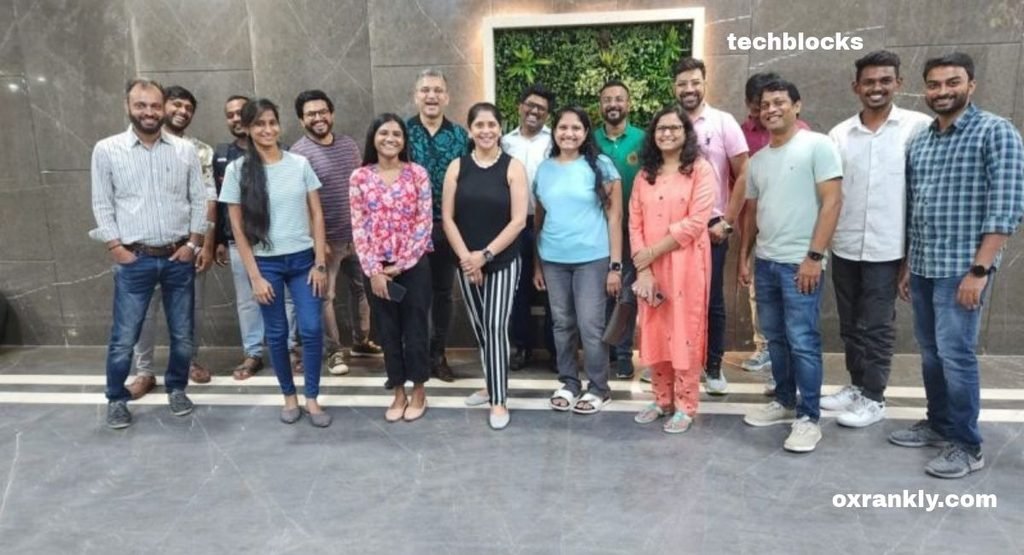
Techblocks can be understood as individual technological components that work together to create a larger system. Similar to how physical building blocks can be combined to construct different structures, technology components can be assembled to develop websites, applications, online platforms, and business software.
For example, a website may use a content management system, a database, a hosting environment, security tools, and a user-friendly design. Each component performs a particular function, but the complete website depends on these components working together correctly.
The same principle applies to mobile applications, enterprise software, online stores, and cloud-based services. Developers can select different technologies according to their requirements and combine them to produce a functional digital product.
The term techblocks does not have one universally accepted technical definition. Its precise meaning may vary according to the company, product, publication, or industry using it. Nevertheless, the broader idea of modular technology provides a useful way to understand how digital systems are developed.
The Concept of Modular Technology
Modular technology divides a complex system into smaller, manageable components. Each component has a particular responsibility, making it easier for developers to build, maintain, test, and improve a digital product.
For instance, an online shopping website might use separate modules for product listings, payment processing, customer accounts, inventory management, and order tracking. If the inventory system needs an upgrade, developers may be able to improve that component without redesigning the entire website.
This approach can save time and reduce unnecessary complexity. It also allows businesses to add features gradually as their needs change.
Why Techblocks Matter
Technology projects can become difficult to manage when every function depends heavily on every other function. A modular approach helps separate responsibilities and establish clearer boundaries between components.
Techblocks, understood in this broader sense, can help organizations create flexible systems that are easier to update and expand. They can also help teams identify technical problems more efficiently because individual components can be tested separately.
The ultimate value comes from choosing appropriate components and integrating them effectively. Simply combining many technologies does not guarantee a successful result. Good planning, reliable implementation, and ongoing maintenance remain essential.
TechBlocks as a Technology and Software Engineering Company

TechBlocks is also the name used by a technology and software engineering company that works with organizations on digital products, enterprise platforms, and technology transformation. The company was founded in 2007 and has developed its business around helping organizations modernize their technology and build digital capabilities.
When researching techblocks, it is useful to distinguish this specific company from the general idea of technology building blocks. The company-related meaning concerns professional technology services and enterprise solutions, whereas the broader meaning describes the components used to develop digital systems.
Businesses often need more than a basic software application to solve operational problems. They may require data integration, customized applications, cloud infrastructure, automated workflows, and systems that connect different departments. Technology engineering firms can help organizations plan and implement these interconnected solutions.
The Role of Technology Consulting

Technology consulting involves understanding an organization’s goals, examining its existing systems, and recommending practical improvements. A company might need to replace outdated software, improve its website, introduce automation, or connect several databases.
A consulting team typically evaluates the current situation before recommending a solution. This process can involve discussions with employees, technical assessments, business analysis, and planning for implementation.
The objective is to ensure that technology investments solve real problems rather than introduce unnecessary complexity. For example, a retailer may need better inventory visibility, while a financial services company may prioritize data accuracy, security, and regulatory requirements.
Custom Software Development
Custom software development means creating applications designed around particular business requirements. Unlike a general-purpose application, custom software can be tailored to specific workflows, user roles, and operational processes.
Examples include customer management systems, inventory dashboards, internal reporting tools, booking platforms, and specialized mobile applications.
Software engineers generally work through several stages, including requirements gathering, design, development, testing, deployment, and maintenance. Each stage contributes to the quality and reliability of the finished product.
Organizations considering custom software should assess the expected benefits, total cost, delivery timeline, maintenance requirements, and ability to integrate the product with existing systems.
Enterprise Digital Transformation
Digital transformation is the process of using technology to improve how an organization operates, serves customers, and creates value. It may involve modernizing legacy applications, introducing cloud services, improving data management, or automating repetitive tasks.
TechBlocks, in its company-specific context, focuses on enterprise technology engineering and AI-related transformation. Its stated capabilities include software and platform engineering, cloud modernization, data platforms, analytics, and artificial intelligence.
Successful transformation requires more than purchasing new software. Organizations also need clear goals, appropriate training, effective leadership, and processes that support adoption. Without these elements, even a technically advanced solution may fail to deliver its intended results.
The Main Technology Building Blocks Behind Modern Digital Systems

Whether a business develops its own software or works with a technology partner, several foundational components commonly support digital products. Understanding these components makes it easier to evaluate how techblocks can contribute to a complete technology solution.
Software Applications
Software applications allow people to perform specific tasks through computers, smartphones, and other connected devices. They can support communication, accounting, project management, education, entertainment, and business operations.
A business application might allow employees to manage customer information, generate reports, or process orders. A consumer application might help users communicate, purchase products, or organize their schedules.
Applications are more useful when their design reflects the needs of their intended audience. Clear navigation, responsive performance, accessibility, and reliable functionality all contribute to a better user experience.
Cloud Computing
Cloud computing provides access to computing resources through network-based services. Instead of maintaining every server and storage system on its own premises, an organization can use cloud infrastructure to run applications and store data.
Cloud services can make it easier to increase computing capacity when demand grows. They can also support remote collaboration, software deployment, backups, and access to shared business systems.
However, cloud adoption requires careful planning. Companies must consider recurring costs, access controls, data protection, service availability, and the consequences of relying on external providers.
Data Management
Data is a central component of modern technology. Organizations collect information about transactions, customers, products, operations, and performance. Properly organized data can help them understand trends and make informed decisions.
Databases store structured information, while analytics systems help users identify patterns and evaluate results. Larger organizations may also use data platforms to combine information from multiple sources.
Data quality is especially important. Incorrect, duplicated, outdated, or incomplete information can lead to misleading reports and poor decisions. Effective data management therefore includes validation, consistent definitions, access controls, and regular maintenance.
Artificial Intelligence
Artificial intelligence enables software systems to perform tasks that commonly involve activities such as language processing, pattern recognition, prediction, and decision support.
Businesses may use AI to classify documents, summarize information, support customer service, forecast demand, or assist employees with routine tasks. Machine learning systems can also identify patterns in suitable datasets.
TechBlocks has positioned AI-enabled engineering and enterprise transformation among its current capabilities.
Nevertheless, AI is not automatically the right solution for every problem. Organizations should evaluate accuracy, cost, privacy, potential bias, human oversight, and the consequences of incorrect outputs before deploying AI in important workflows.
Cybersecurity and Access Control
Cybersecurity protects applications, networks, devices, and information from unauthorized access, disruption, and misuse. It is an essential part of almost every modern technology system.
Common security measures include strong authentication, access permissions, encryption, software updates, security monitoring, and reliable backup procedures.
Companies should also consider how employees handle sensitive information. Human mistakes, weak passwords, fraudulent messages, and excessive account permissions can create security risks even when technical systems are well designed.
Building security into a project from the beginning is generally more effective than treating it as an afterthought.
APIs and System Integration
An application programming interface, commonly known as an API, allows software systems to communicate through defined rules and interfaces.
For example, an online store might connect its website to a payment processor, shipping service, customer database, and inventory management system. APIs can allow these systems to exchange the information needed to complete an order.
Integration helps reduce manual data entry and can improve the consistency of business operations. However, systems must be configured carefully to handle errors, authentication, data formats, and service interruptions.
A well-integrated digital environment allows different tools to work together without requiring employees to repeat the same tasks across multiple platforms.
How TechBlocks Can Support Business Growth
Technology becomes particularly valuable when it helps a business achieve measurable objectives. Companies should evaluate digital solutions according to their contribution to efficiency, customer satisfaction, reliability, and sustainable growth.
Improving Operational Efficiency
Many organizations still depend on repetitive manual processes, disconnected spreadsheets, and outdated software. These practices can consume employees’ time and increase the likelihood of errors.
Automation and well-designed applications can help streamline activities such as invoice processing, order tracking, appointment scheduling, and report generation.
For example, an online retailer could connect its inventory records with its ordering system. When a customer purchases a product, the inventory information can be updated automatically, reducing the need for manual adjustments.
Efficiency improvements should be measured carefully. A useful project might reduce processing time, lower error rates, or allow employees to focus on more valuable work.
Enhancing Customer Experience
Customers expect digital services to be convenient, responsive, and reliable. They want websites that load quickly, applications that are easy to navigate, and support systems that provide useful answers.
Technology can help businesses understand customer needs, personalize suitable experiences, and reduce unnecessary steps in purchasing or service processes.
A company might use a customer relationship management system to organize enquiries, track previous interactions, and help support teams respond more consistently.
However, personalization should respect privacy and user preferences. Collecting more information than necessary can create risks without necessarily improving the customer experience.
Supporting Better Decision Making
Managers often need accurate information to determine which products are performing well, where costs are increasing, and which operational processes require improvement.
Analytics dashboards can combine relevant information into reports that are easier to understand. When data is reliable and presented clearly, decision-makers can identify patterns and compare performance over time.
For instance, a retailer could review sales by product category, monitor stock levels, and compare performance across different periods. A service company might analyze response times and customer feedback.
The important point is that technology should support informed decisions rather than replace critical thinking. Reports need context, reliable data, and appropriate interpretation.
Creating Opportunities for Innovation
Modern digital systems can help organizations test new ideas without rebuilding their entire infrastructure. Modular software, cloud resources, and reusable components can make experimentation more manageable.
A business might introduce a new customer feature, test an automated workflow, or develop a mobile application for a specific audience.
When projects are organized into manageable stages, teams can gather feedback and make improvements before investing heavily in a larger rollout.
This approach can help businesses respond to changing customer expectations while controlling technical and financial risks.
TechBlocks and the Future of Artificial Intelligence
Artificial intelligence is becoming an important part of software development and business operations. Organizations are exploring how AI can improve productivity, support employees, process information, and create new digital services.
In the context of TechBlocks as a technology company, AI is relevant because its stated services include AI transformation, engineering, data foundations, and cloud technology.
AI Powered Business Automation
Business automation uses technology to perform tasks that would otherwise require repeated manual effort. AI can extend these capabilities by helping systems interpret documents, classify requests, summarize information, and generate suggested responses.
For example, a customer support department might use an AI assistant to summarize customer enquiries before an employee responds. An operations team could use predictive tools to identify unusual patterns in demand.
These applications can save time when implemented carefully. However, businesses should establish clear rules for sensitive decisions and ensure that employees can review or correct automated results.
AI in Software Engineering
AI tools can assist developers with writing code, identifying potential errors, generating documentation, and explaining unfamiliar technical concepts. These capabilities may help engineering teams work more efficiently.
Nevertheless, AI-generated code must still be reviewed and tested. Software can contain security vulnerabilities, performance problems, or logical errors even when it appears correct.
A dependable development process combines AI assistance with experienced engineers, automated testing, version control, security reviews, and clear accountability.
Building an AI-Ready Business
Organizations cannot always introduce advanced AI tools successfully without preparing their existing systems. Reliable data, appropriate infrastructure, access controls, and well-defined processes provide an important foundation.
Businesses should begin by identifying a specific problem rather than adopting AI simply because the technology is popular. They can then test a suitable solution, measure its results, and expand its use when the evidence supports doing so.
This practical approach can help organizations manage costs and avoid investing in technology that does not produce meaningful benefits.
The Importance of TechBlocks in Website and Application Development
Websites and applications illustrate how different technology components combine to create a complete digital experience. A website may appear simple to visitors, but several systems often operate behind the scenes.
Website Infrastructure and Hosting
Website hosting provides the computing environment needed to make a website available online. Depending on the project, hosting may include server resources, storage, database services, backups, and security features.
A suitable hosting arrangement should reflect the website’s expected traffic, technical requirements, budget, and growth plans.
Small blogs and business websites may operate effectively with relatively simple hosting. Larger applications with substantial traffic or specialized requirements may need more advanced infrastructure.
Choosing the right environment helps maintain performance without paying for resources that are unnecessary.
User Interface and Website Design
The user interface is the part of a website or application that visitors interact with directly. It includes navigation menus, buttons, forms, typography, page layouts, and other visual elements.
Good interface design makes information easier to find and actions easier to complete. It should also work across different screen sizes, including desktop computers, tablets, and smartphones.
Accessibility is another important consideration. Clear text, sufficient contrast, descriptive labels, and keyboard-friendly navigation can make digital products easier for more people to use.
An attractive design is valuable, but it should support the site’s purpose rather than distract from its content.
Search Engine Optimization and Digital Visibility
Search engine optimization, commonly called SEO, helps search engines understand website content and determine which pages may be relevant to users’ searches.
Important considerations include useful original content, descriptive page titles, logical headings, crawlable navigation, mobile usability, and technically accessible pages.
For a content-based website, a well-organized structure can help readers explore related subjects and understand the site’s main categories.
However, using technology tools or publishing large numbers of articles does not guarantee search rankings. Search performance depends on many factors, including relevance, content quality, competition, indexing, and the needs of the audience.
A sustainable digital strategy prioritizes helpful information and a reliable user experience.
Common Challenges When Implementing TechBlocks
Although modular technologies can provide substantial benefits, organizations must consider several challenges before adopting new systems.
Integration Complexity
Different software products may use incompatible data formats, authentication methods, or operating procedures. Connecting them can require additional engineering and testing.
Businesses should examine integration requirements early and determine how information will move between systems. They should also plan for errors, service interruptions, and future changes.
Budget and Maintenance
Technology costs extend beyond the initial development or purchase price. Organizations may also need to pay for hosting, subscriptions, security monitoring, employee training, upgrades, and technical support.
A realistic budget should account for the complete lifecycle of the solution.
Regular maintenance is particularly important because software dependencies, security threats, and business requirements change over time.
Data Privacy and Security
Digital systems may process customer information, employee records, payment details, or confidential business documents. Poorly designed access controls and inadequate security practices can expose this information.
Organizations should identify which information is collected, why it is required, where it is stored, and who can access it.
They should also establish backup procedures, incident response plans, and appropriate retention policies. Compliance requirements depend on the jurisdictions and industries in which a business operates.
Employee Training and Adoption
Even a well-designed system may deliver limited benefits if employees do not understand how to use it.
Organizations should provide relevant training, explain the reasons for changes, and gather feedback from the people who use the technology every day.
Gradual implementation can help teams identify problems before a new system becomes essential to daily operations.
How to Evaluate a TechBlocks Technology Solution
Businesses researching techblocks or considering a technology provider should assess the solution according to their actual requirements.
First, define the problem. Determine whether the organization needs a new application, cloud migration, data integration, automation, AI capabilities, or a more reliable existing system.
Second, evaluate the proposed approach. Ask how the solution will work with current software, how data will be protected, and which resources will be needed.
Third, examine the expected results. Useful measures might include reduced processing time, fewer errors, improved customer satisfaction, lower operating costs, or faster software releases.
Fourth, understand the ongoing responsibilities. Clarify who will maintain the system, manage updates, monitor security, and provide technical support after implementation.
Finally, consider whether the solution can adapt as the organization grows. Flexible architecture and clear documentation can make future changes easier to manage.
These steps help businesses distinguish practical technology investments from projects that offer impressive features without a clear business purpose.
The Future of TechBlocks and Digital Innovation
The technology industry will continue to evolve as artificial intelligence, cloud computing, connected devices, and data analytics become more deeply integrated into everyday business activities.
One important direction is the development of systems in which AI, data, and cloud infrastructure operate together rather than as isolated tools. Organizations are increasingly interested in connecting these capabilities to real business outcomes.
Another direction is the growing importance of security and governance. As digital systems become more interconnected, businesses must understand how information is processed, how decisions are made, and how access is controlled.
Automation may also change software development. Developers will continue to need strong technical skills, but their work may increasingly involve supervising AI-assisted processes, designing system architecture, evaluating outputs, and ensuring reliability.
Modular design is likely to remain useful because it allows organizations to update individual components without necessarily replacing entire systems. The challenge will be balancing flexibility with simplicity, security, and long-term maintainability.
For a technology company such as TechBlocks, these developments create opportunities to help organizations modernize their systems and build more integrated digital capabilities. For technology users more generally, they demonstrate why understanding the components behind digital services is becoming increasingly valuable.
Frequently Asked Questions About TechBlocks
What does techblocks mean
Techblocks can refer to modular components used to build technology systems. It is also used as a company name in the technology and software engineering industry. The intended meaning depends on the context.
Is TechBlocks a technology company
Yes. TechBlocks is the name of a technology engineering and consulting company that provides enterprise software, digital platform, cloud, data, and AI-related services.
How can techblocks help businesses
In the general sense, technology building blocks can help businesses create websites, automate processes, connect applications, organize data, and improve digital services. The benefits depend on the technologies selected and how effectively they are implemented.
Are techblocks useful for small businesses
Yes. Small businesses can benefit from modular technologies such as website platforms, customer management tools, online payment systems, cloud storage, and analytics software.
The best starting point is usually a specific operational need rather than a large, complicated technology project.
What is the relationship between techblocks and AI
Technology components provide the infrastructure, data connections, and software capabilities that AI systems may need. AI can then support tasks such as information analysis, automation, prediction, and customer service.
The effectiveness of these applications depends on suitable data, reliable infrastructure, appropriate safeguards, and careful implementation.
How should a company choose a technology solution
A company should identify its requirements, compare suitable approaches, assess security and integration needs, estimate the total cost, and define measurable outcomes. It should also consider maintenance, employee training, and the ability to expand the system later.
Conclusion
Techblocks represents a useful concept for understanding how individual technologies can combine to create complete digital systems. Software applications, cloud infrastructure, databases, APIs, cybersecurity, and artificial intelligence can each perform different functions while contributing to a shared objective.
In its company-specific context, TechBlocks is associated with software engineering, enterprise technology, cloud modernization, data platforms, and AI-driven transformation. These services illustrate how technology specialists can help organizations address complex digital challenges.
For businesses, the most important consideration is not the number of tools they adopt but whether those tools solve meaningful problems. Effective planning, appropriate integration, reliable security, and continuous improvement are essential for long-term success.
As digital innovation continues, understanding techblocks can help readers make more informed decisions about software, business technology, and the systems that support modern life. Whether the goal is to improve a website, modernize business operations, or explore artificial intelligence, a strong technological foundation provides a practical starting point for sustainable digital growth.